- In the Press
"Look at all these windows! Better yet, look through them. Man, this view! Is it bonkers, or what? A massive sweep of yucca-dotted ridge lines and Red Rock escarpment fill the two glass walls…"
Desert Companion
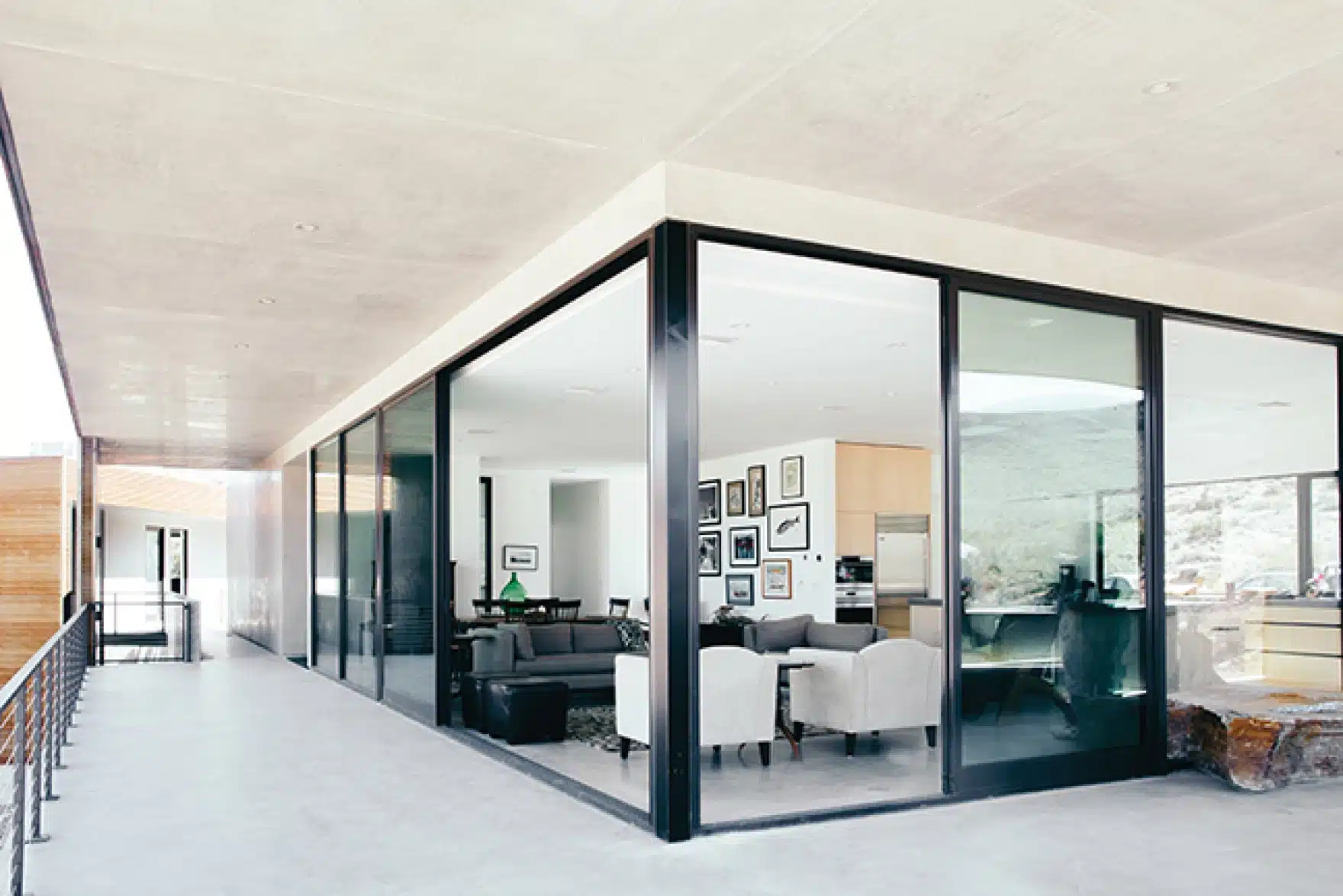
Arroyo House, Blue Diamond | Hoogland Architecture
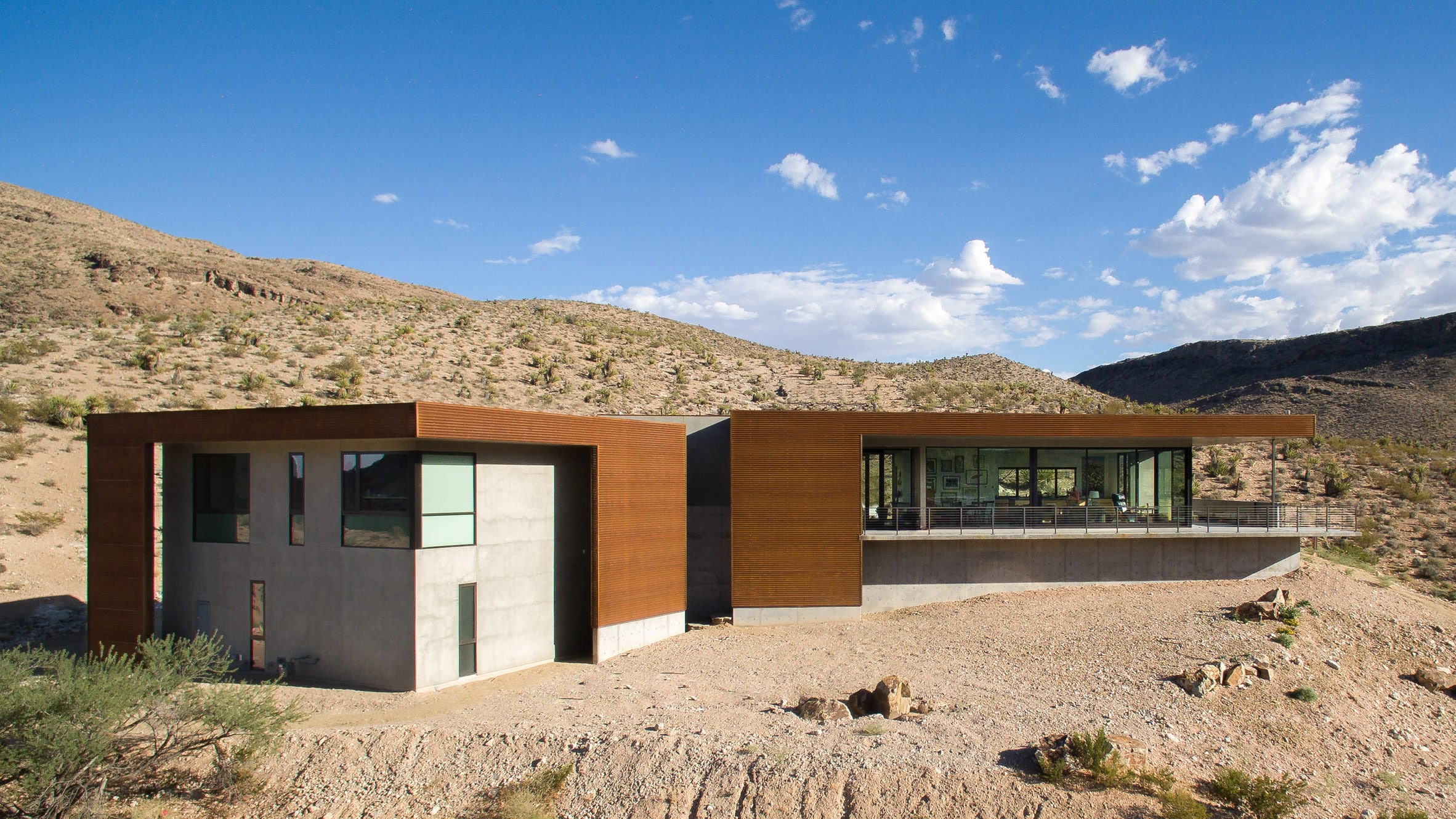
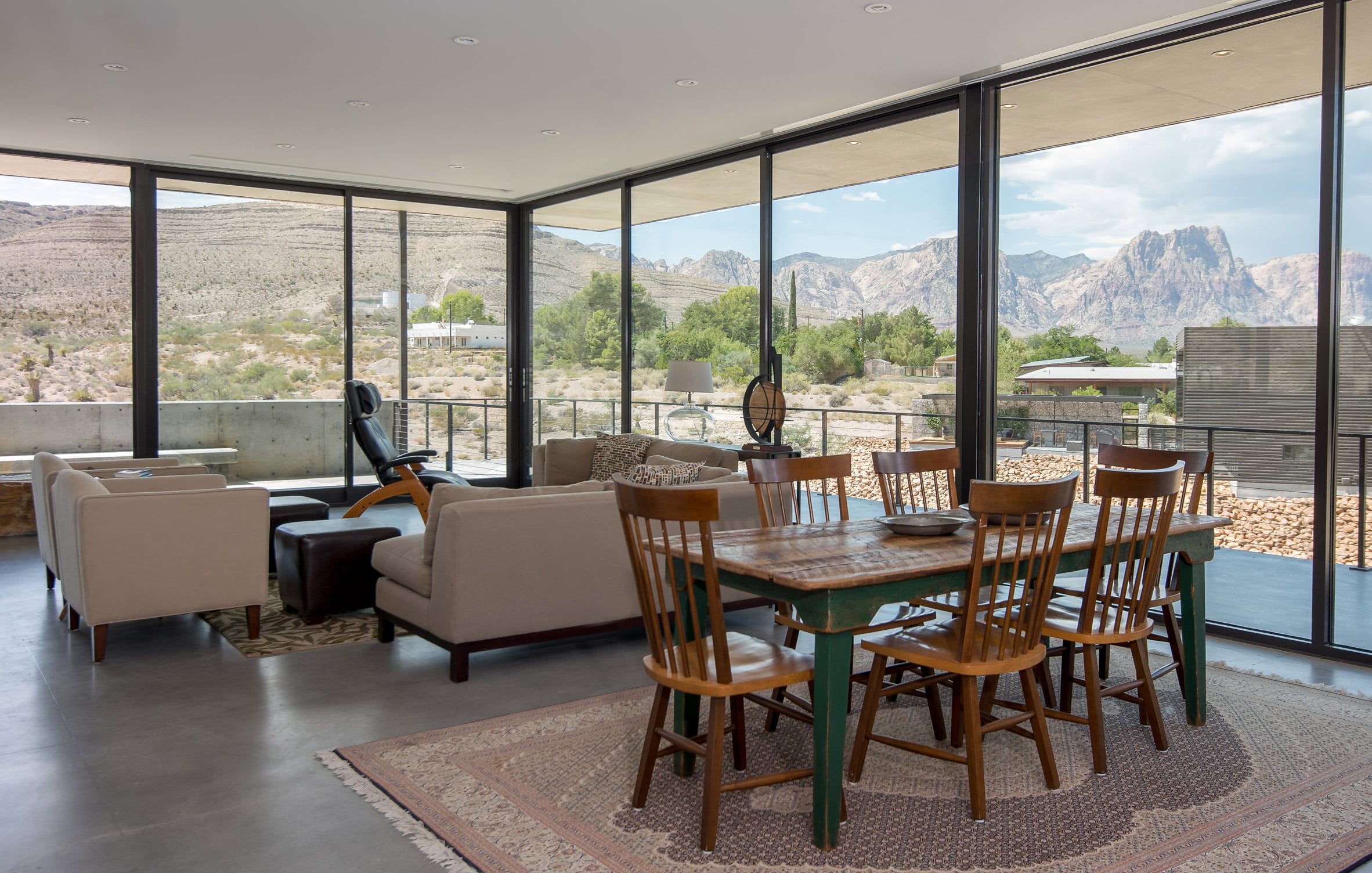
Look at all these windows! Better yet, look through them. We’ll get to the rest of Scott and Laurie Lee’s Blue Diamond home in a moment, but first — man, this view! Is it bonkers, or what? A massive sweep of yucca-dotted ridgelines and Red Rock escarpment fills the two glass walls, as close as a neighbor, and is the first — and for a minute the only — thing you see as you enter their spacious, open living/dining/kitchen area.
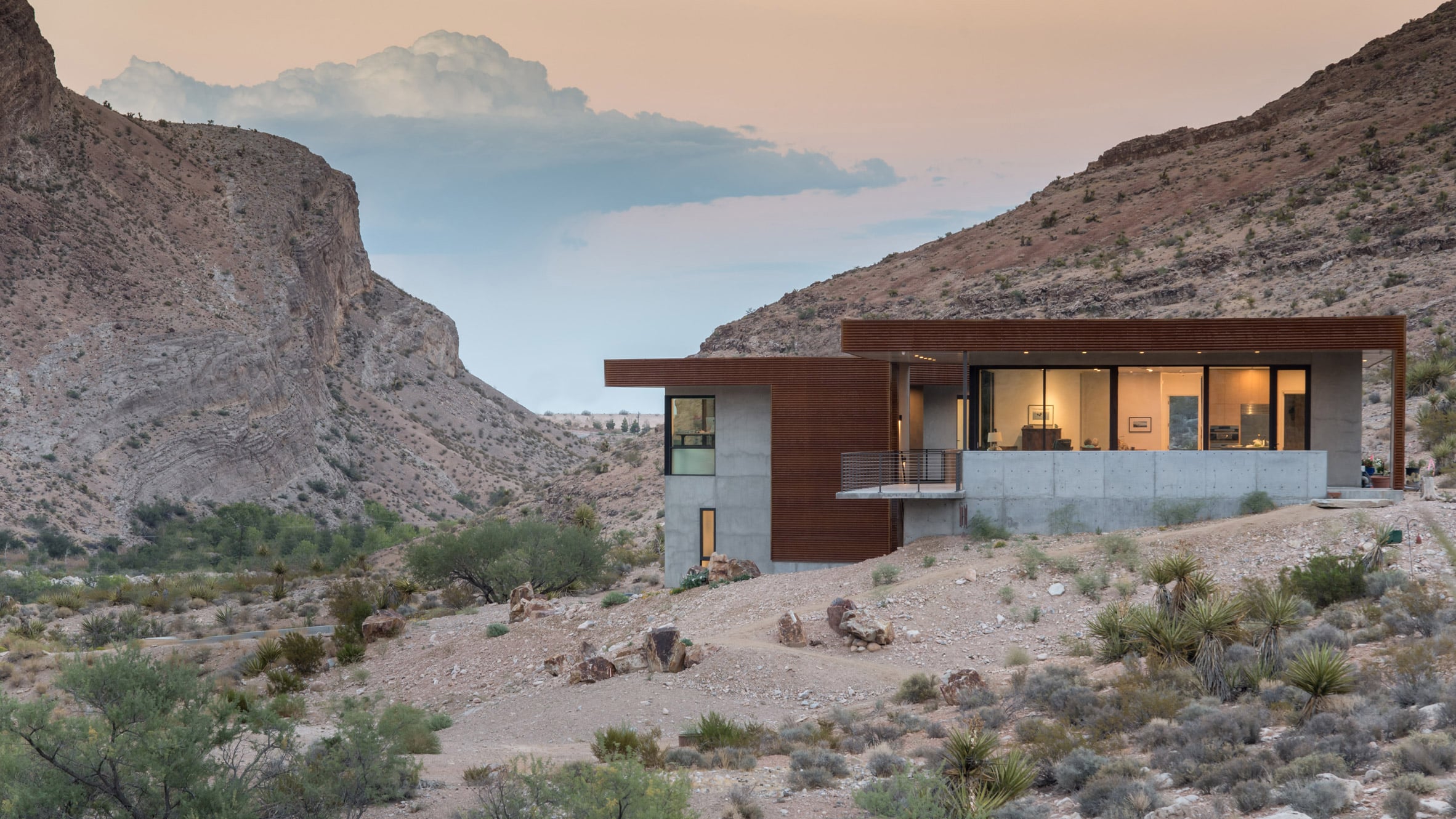
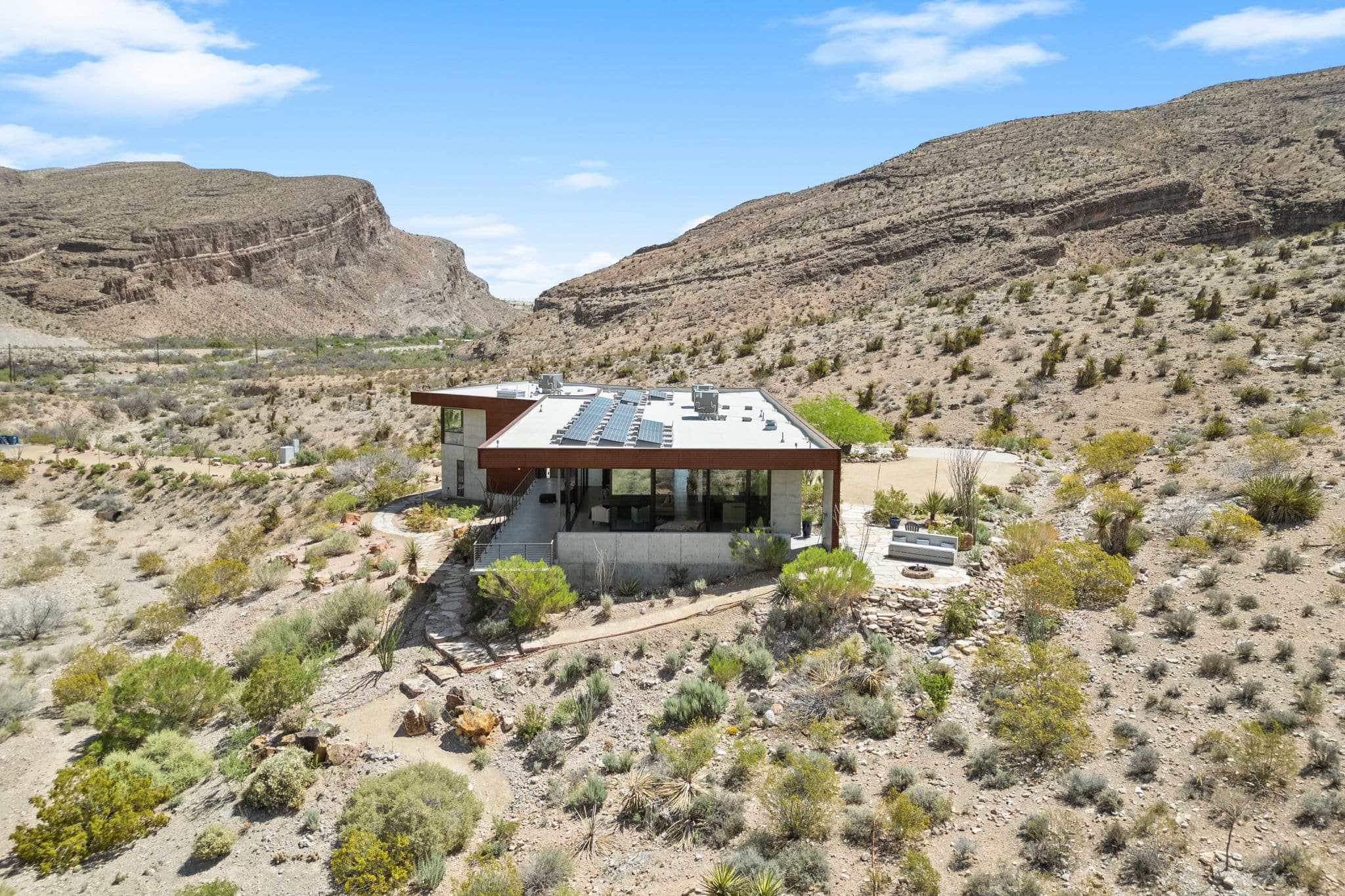
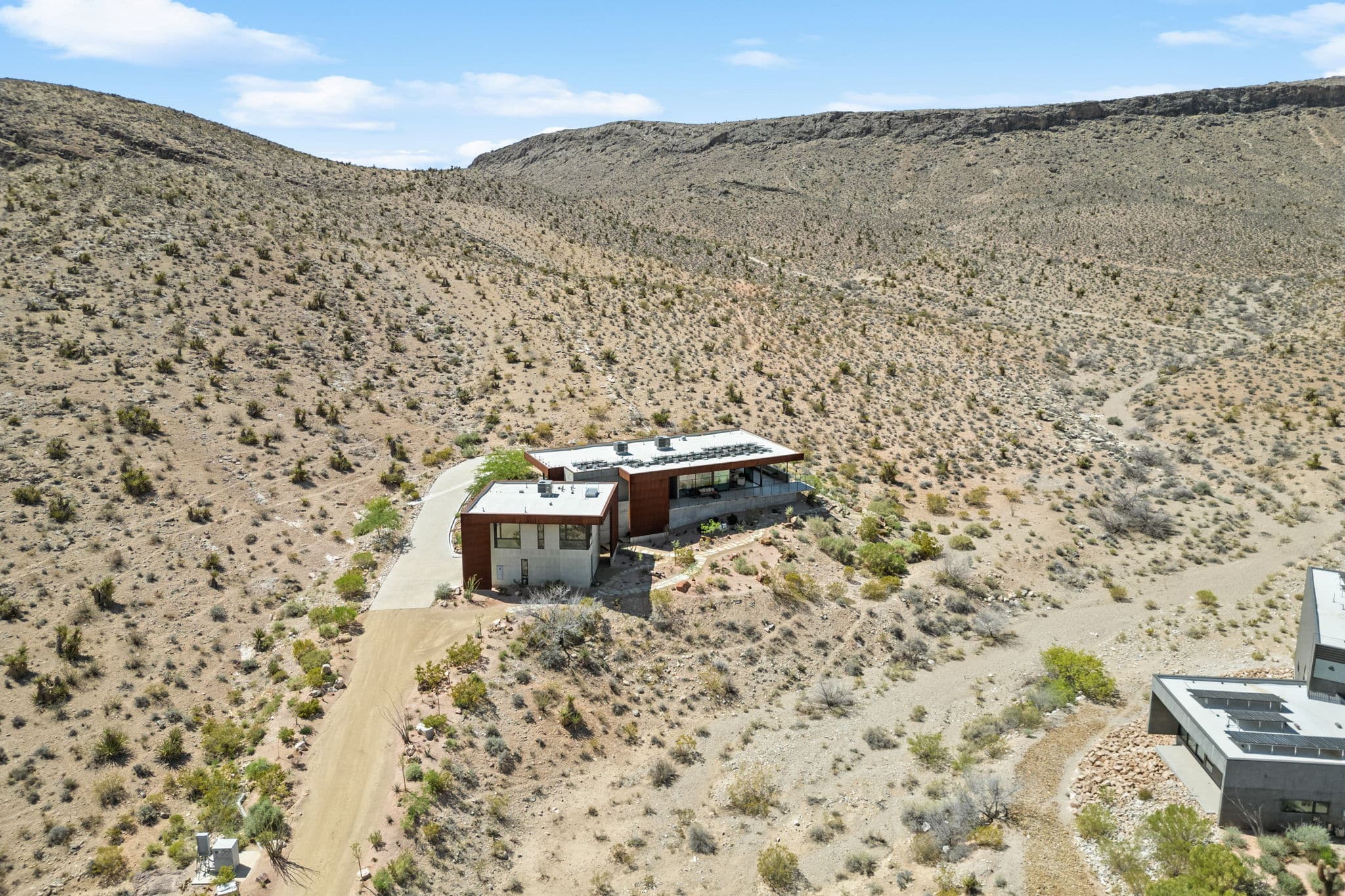
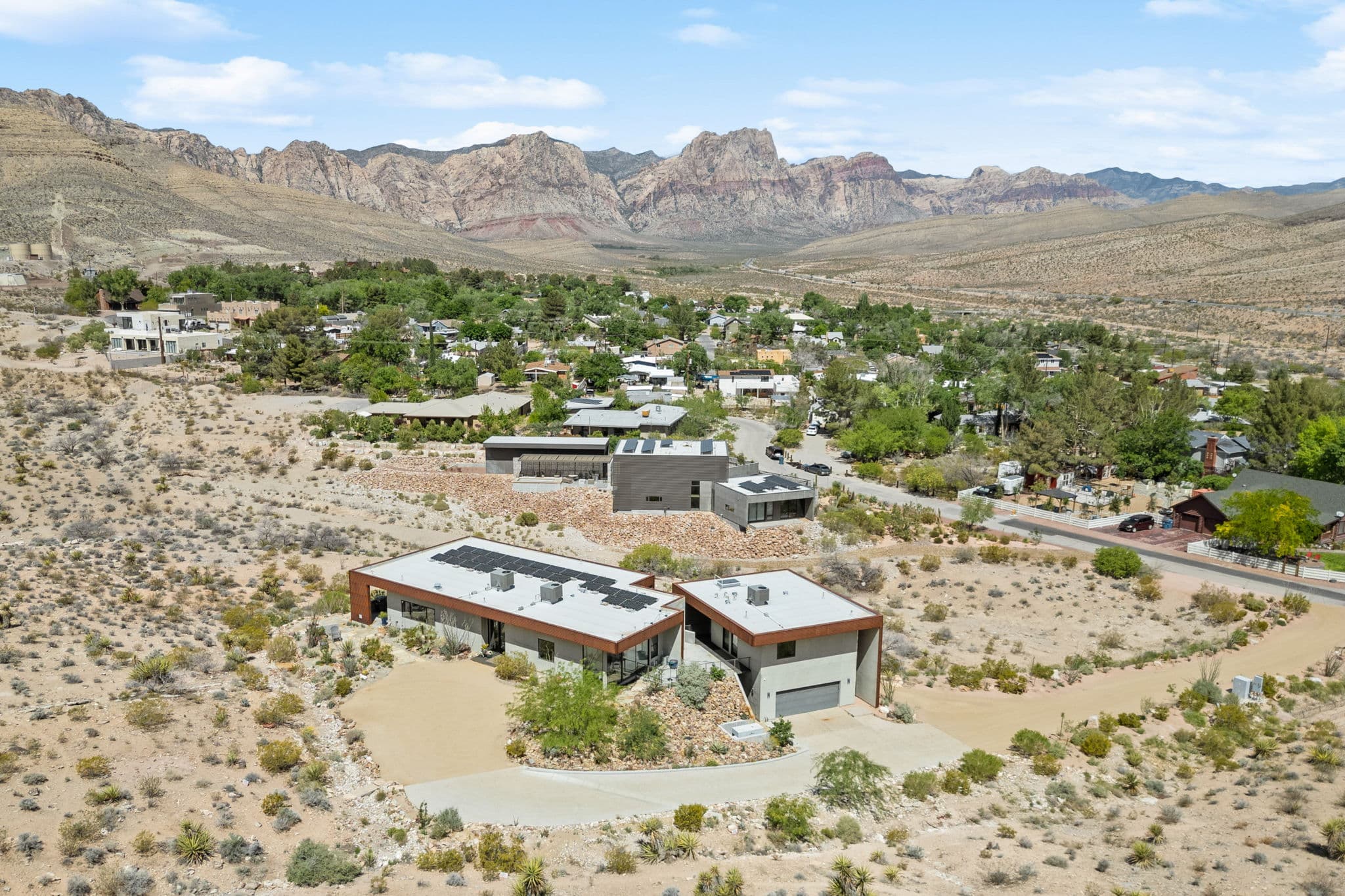
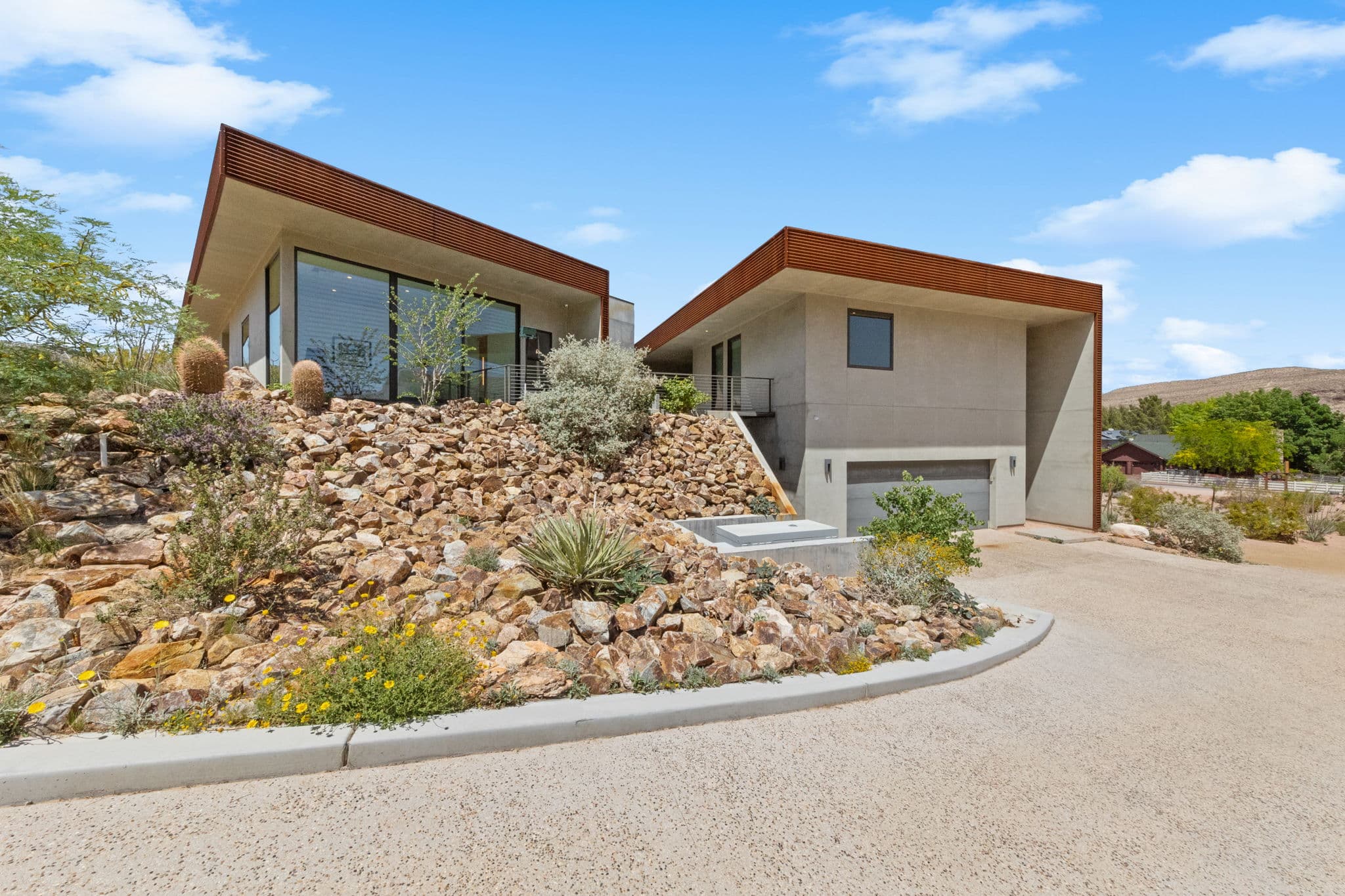
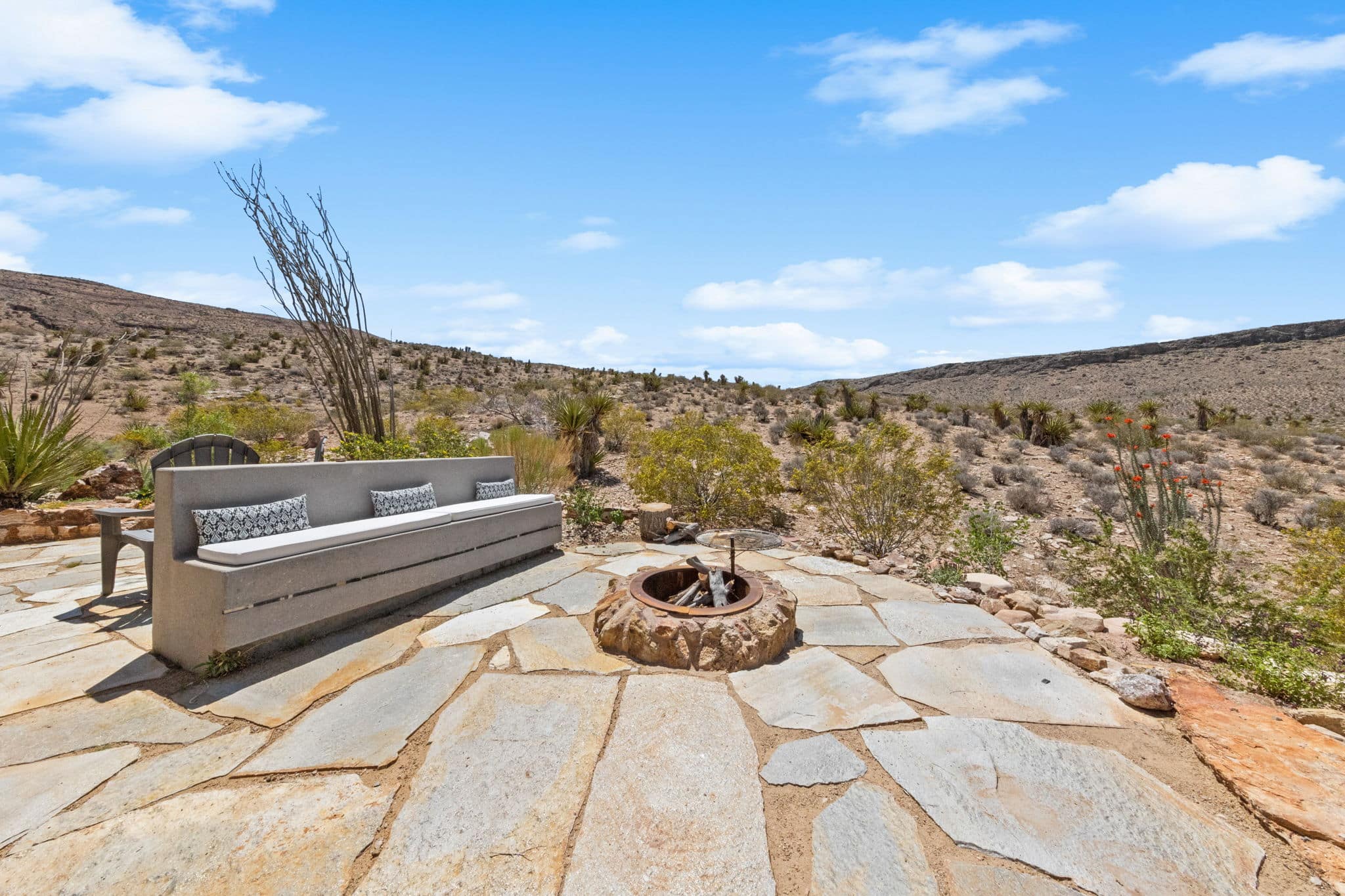
That’s by design, of course. A dramatic reveal is what you do when you build a house on a hillside overlooking a rural hamlet. It’s why you build there. Dubbed the Arroyo House by its architect, Henry “CJ” Hoogland, it’s one of two adjacent homes he designed to capture, each in its different way, an indoor/outdoor dynamic appropriate to the grand setting.
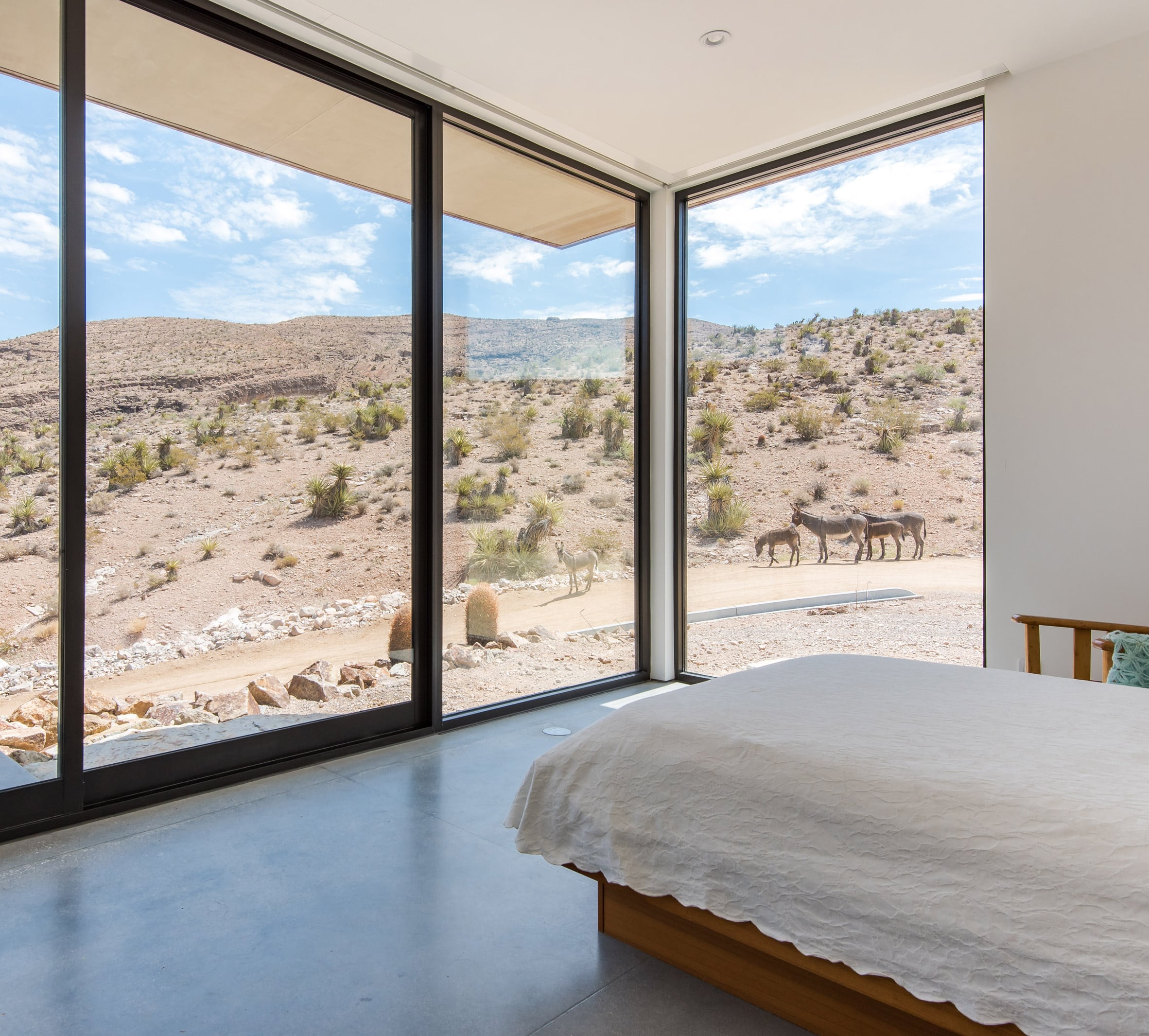
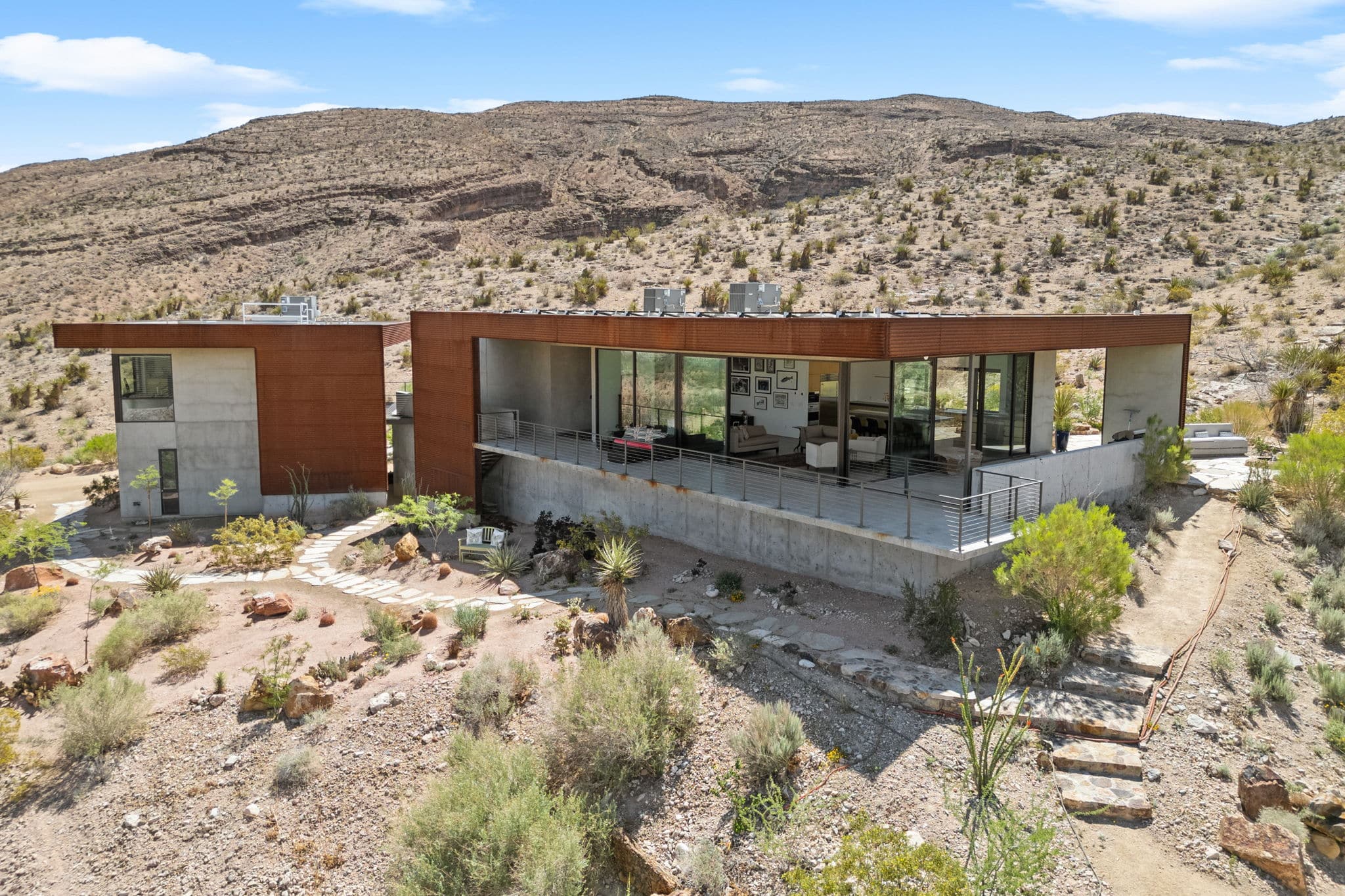
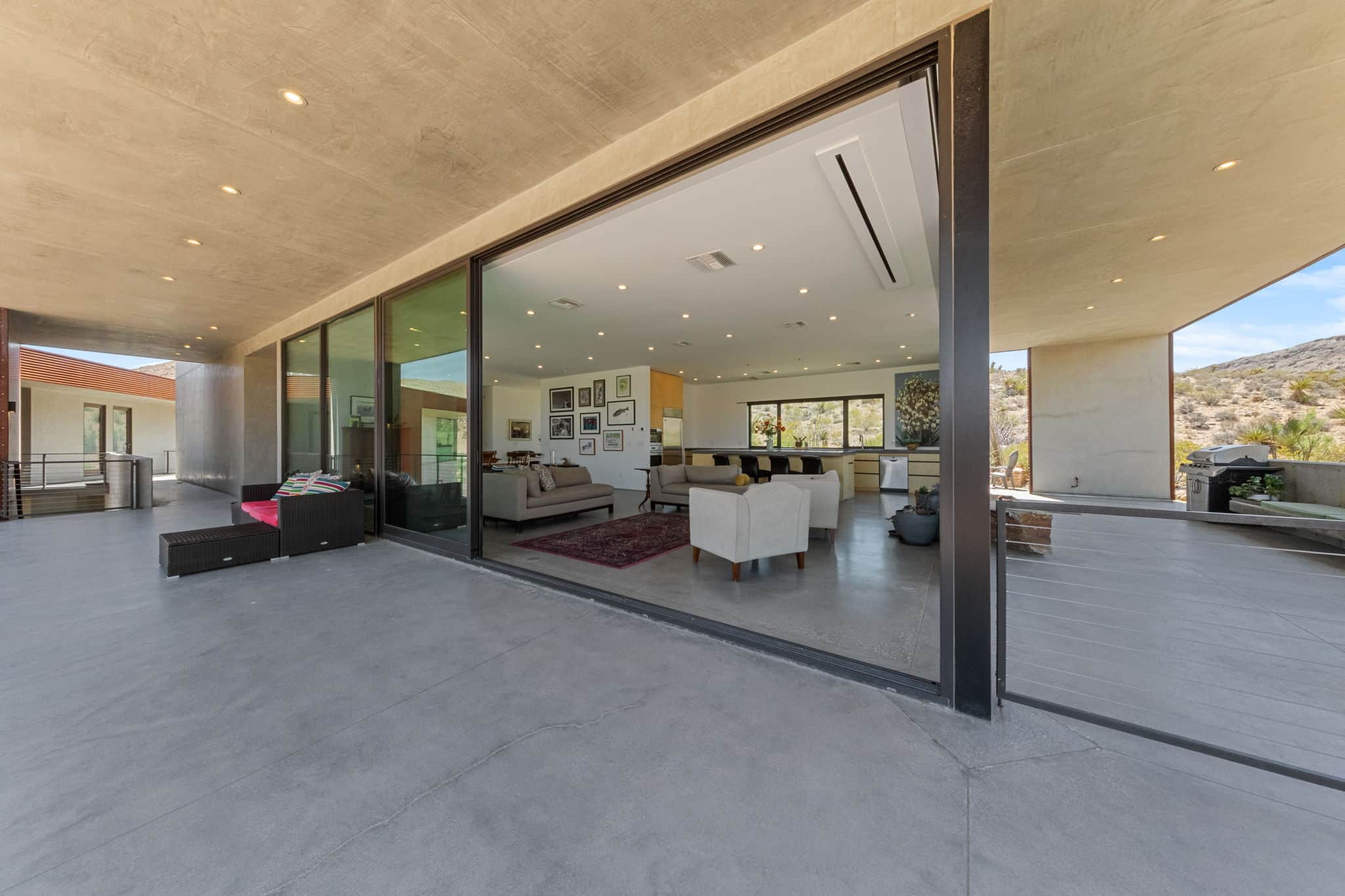
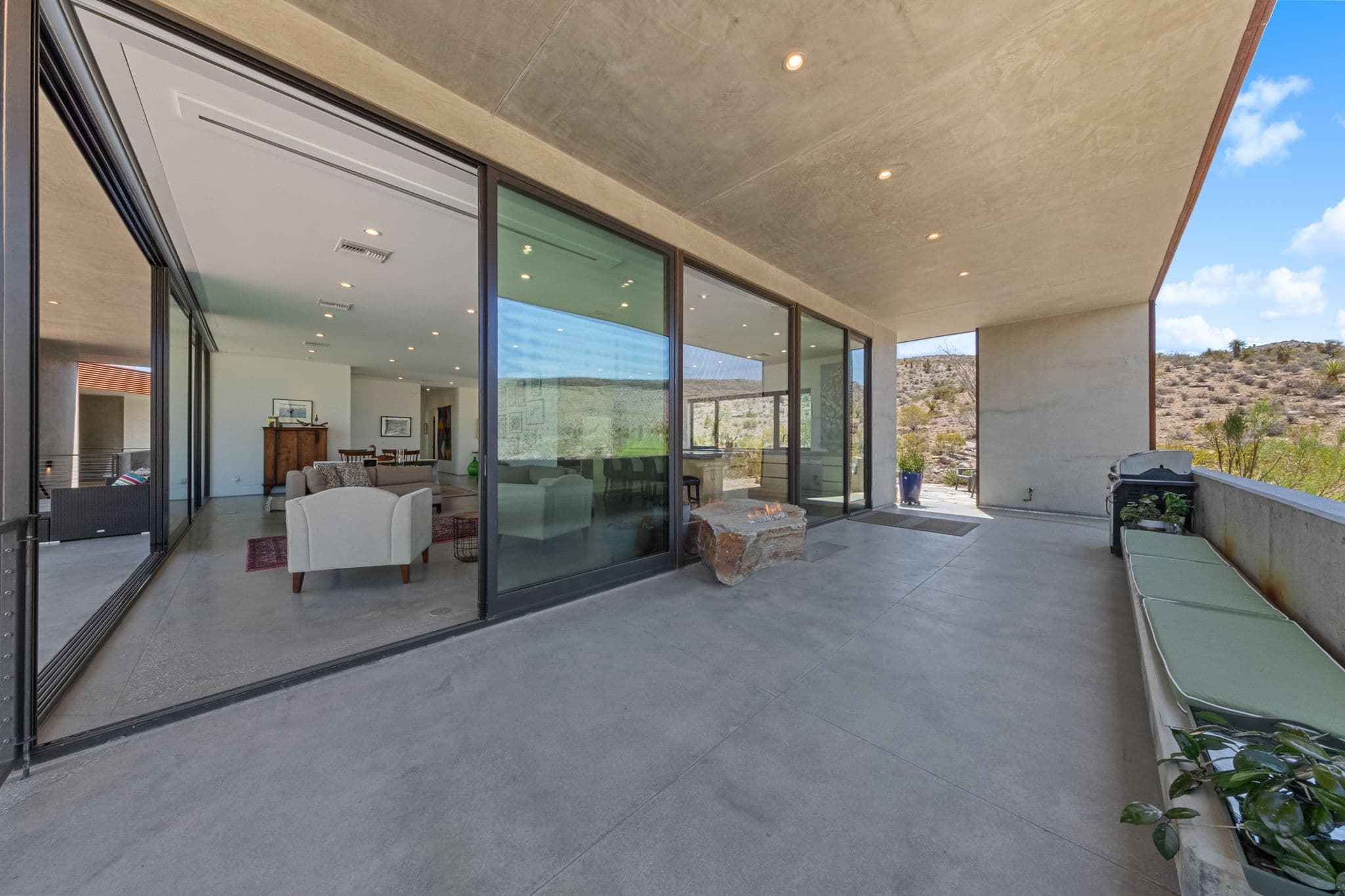
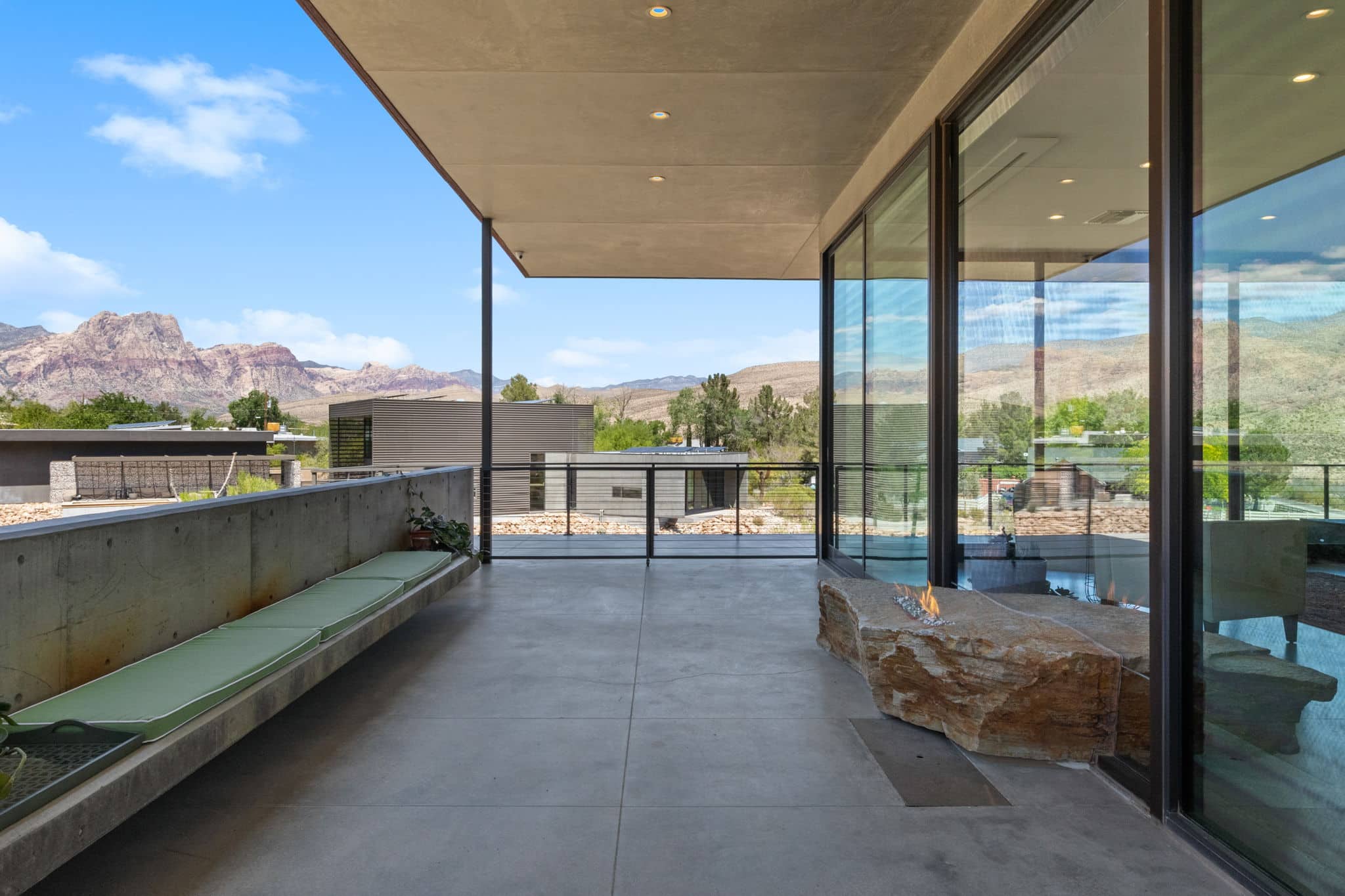
Meeting the Lees, you see an immediate pattern: Their open, welcoming personalities are mirrored in their open, expansive main area, which merges with the expansive openness of the view. Do you think we have enough windows, Laurie Lee joked during construction. Oh, yeah. Seriously, there’s glass everywhere. With a setting like this, you put as little as possible between it and you — and then make those boundaries permeable. The floor-to-ceiling glass slides open onto a broad, wraparound patio, extending the living space outward and inviting the desert in. Take it from us: It’s every bit as homey as it sounds. Good for entertaining, too. During a New Year’s Eve dinner, some 70-80 Blue Diamond residents flowed easily in and out.
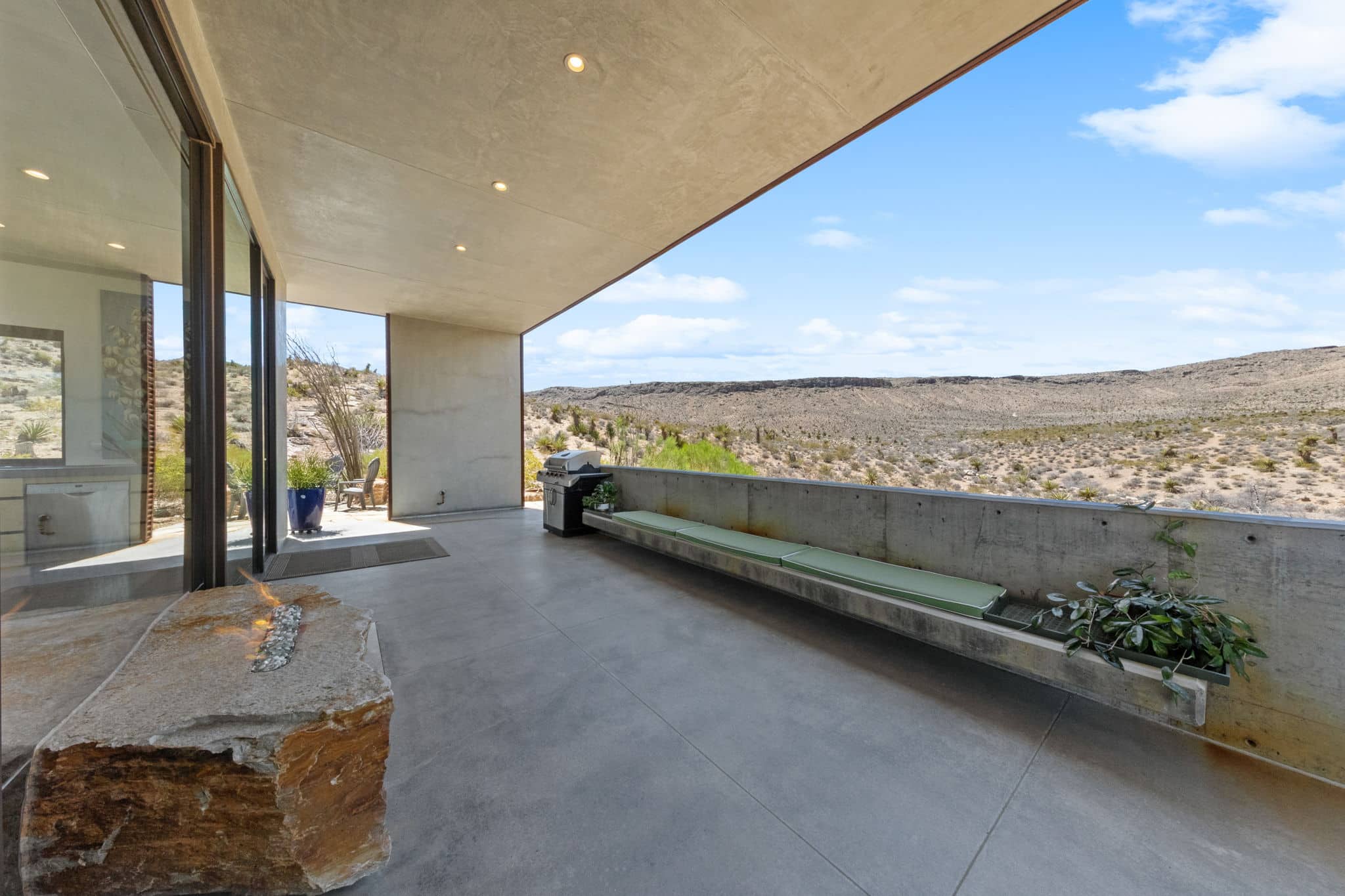
At least one glass panel doesn’t slide: It’s fitted around a flat boulder that sits half inside the house and half out on the patio. (A slot cut into the outside stone contains a fire element — a stylized fireplace.) A literal enactment of the inside-outside idea, it lends the space a bit of spectacle and required structural reinforcement and nifty work with the glass. “We built the house around the boulder,” Scott Lee says.
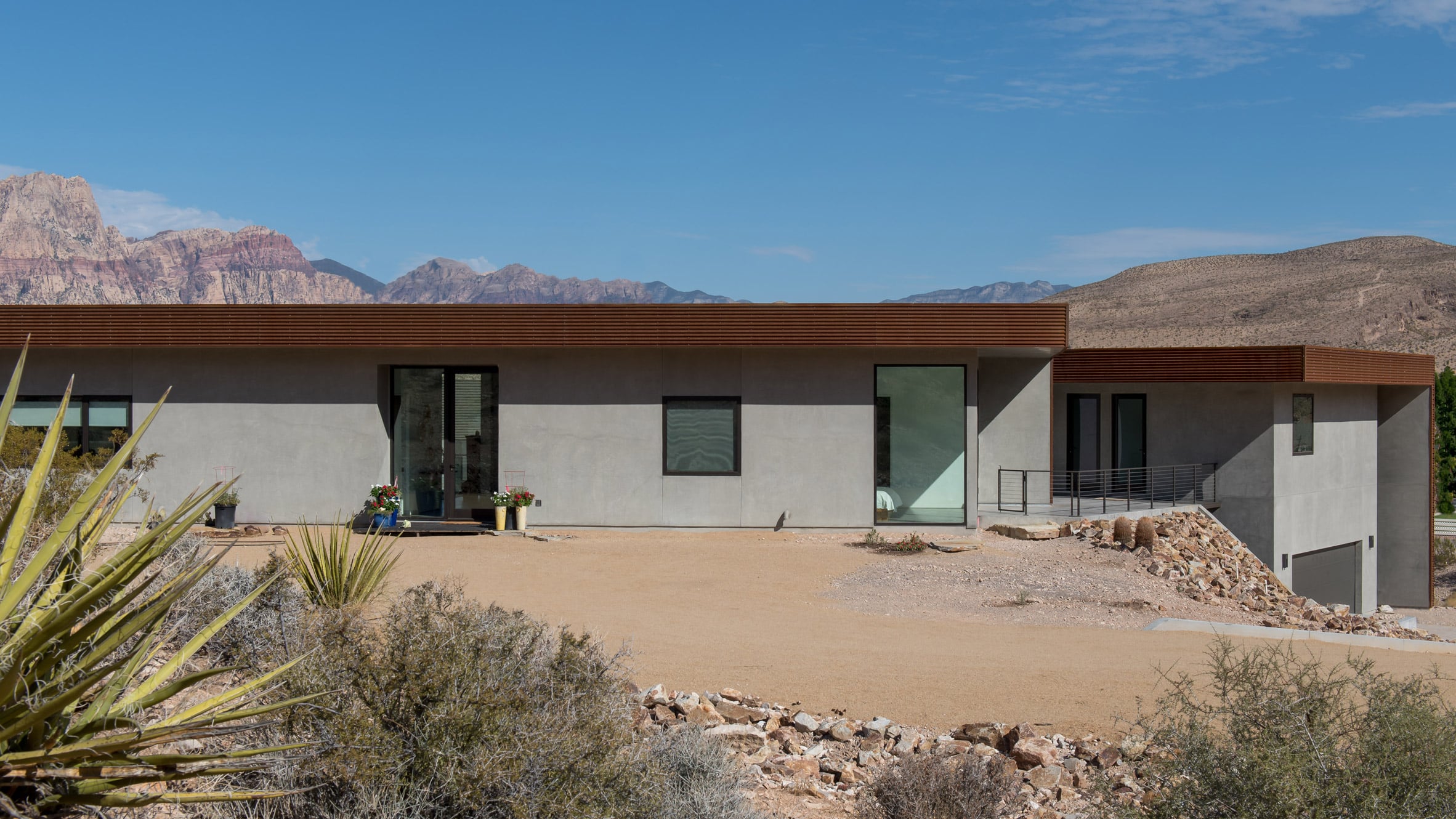
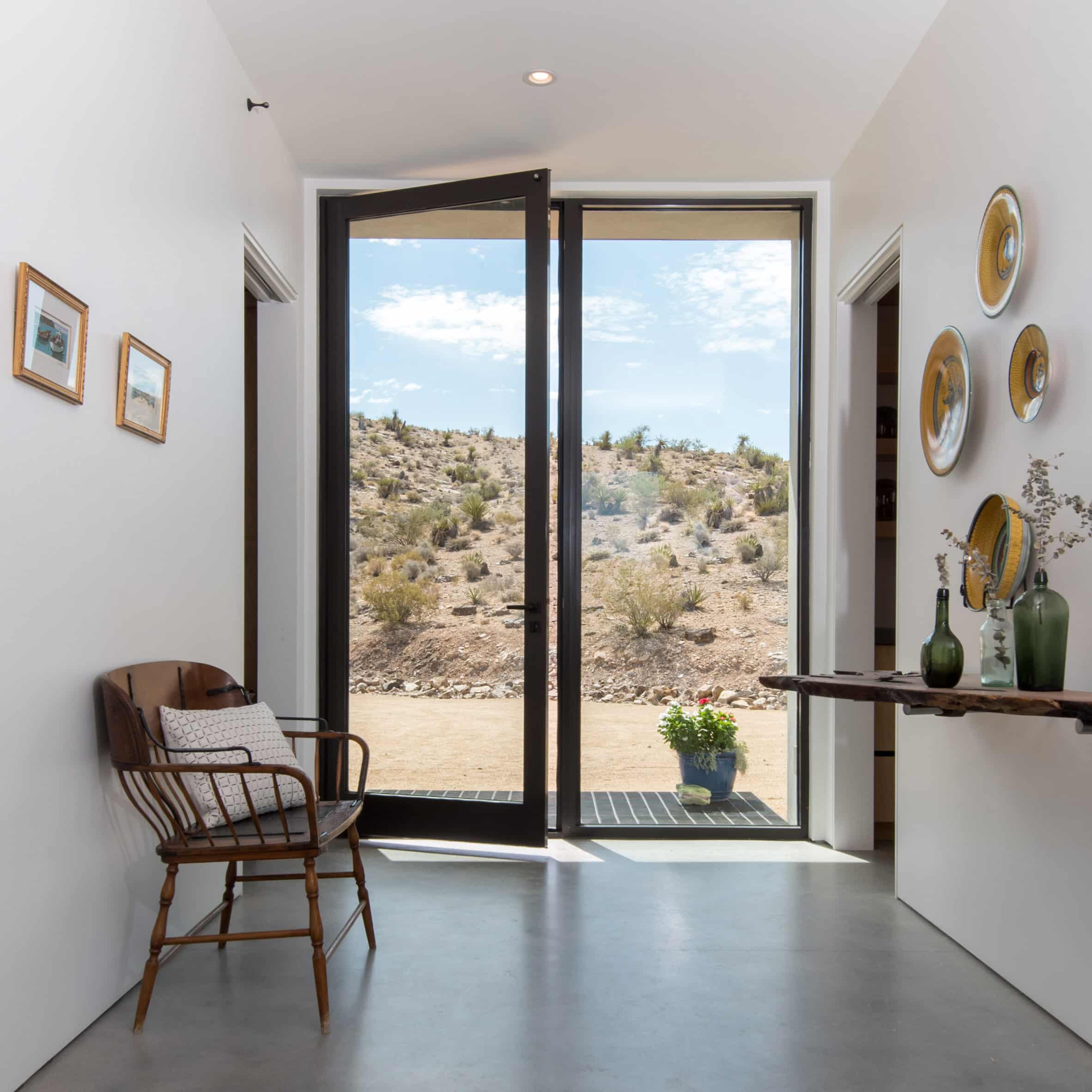
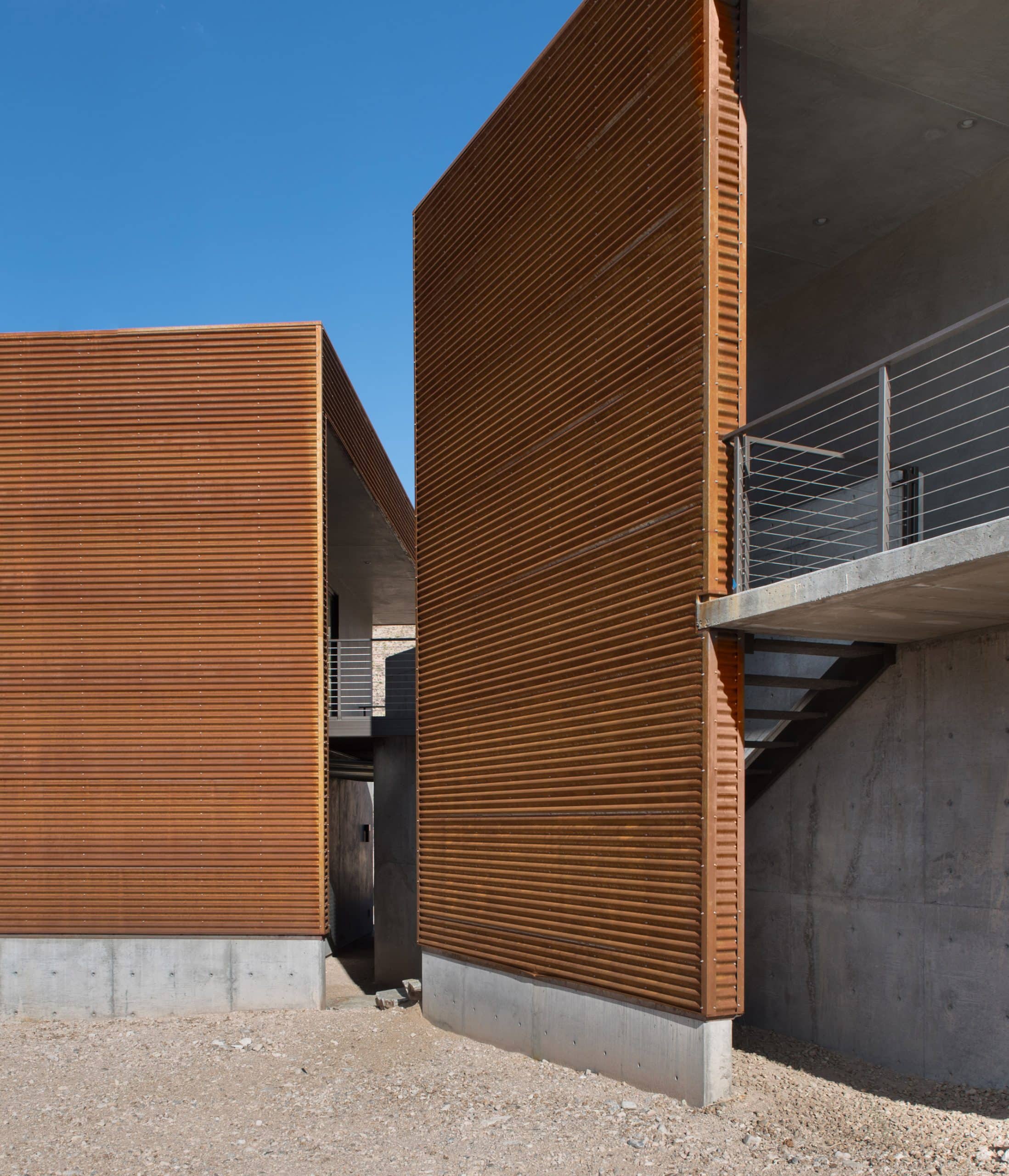
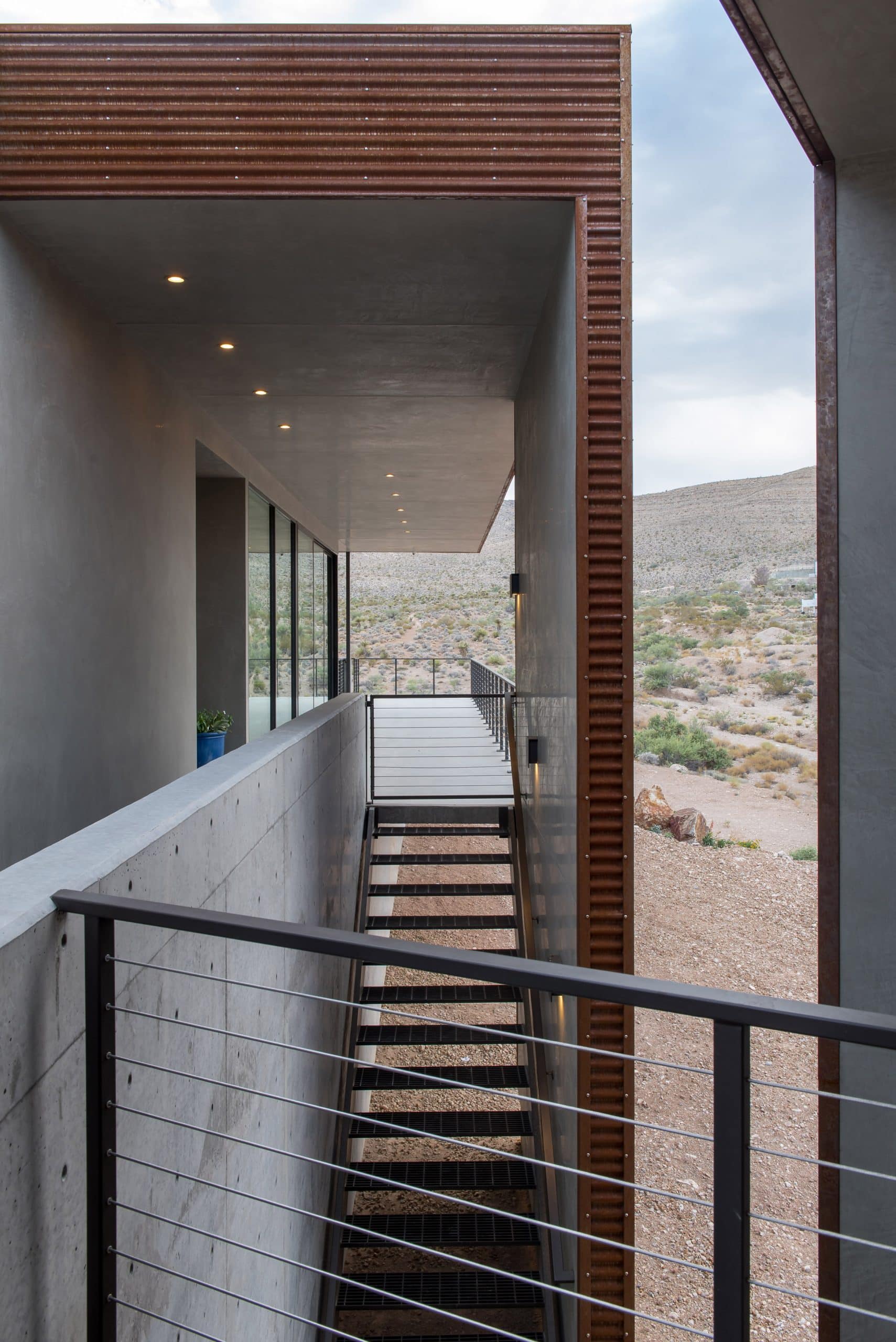
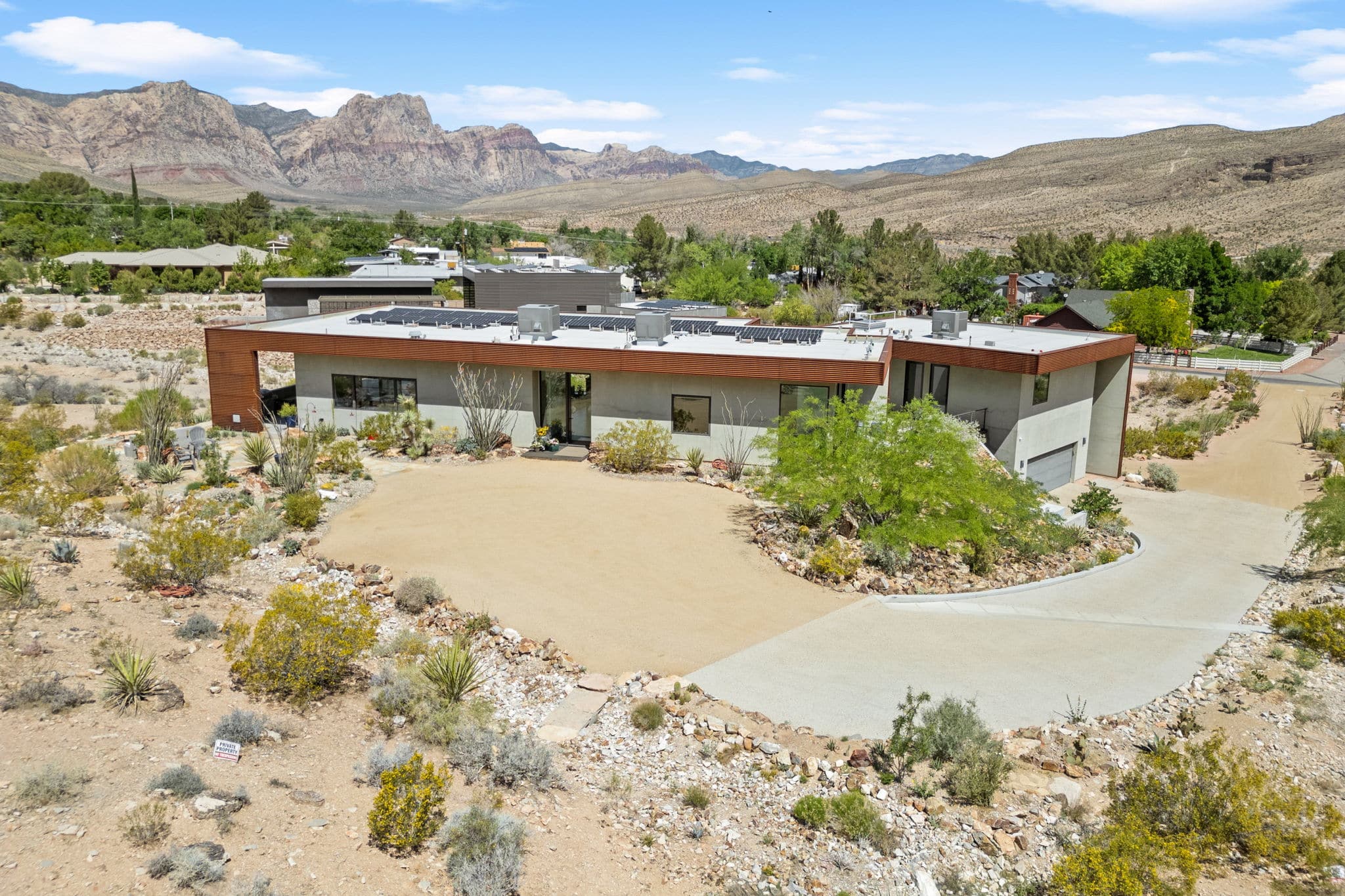
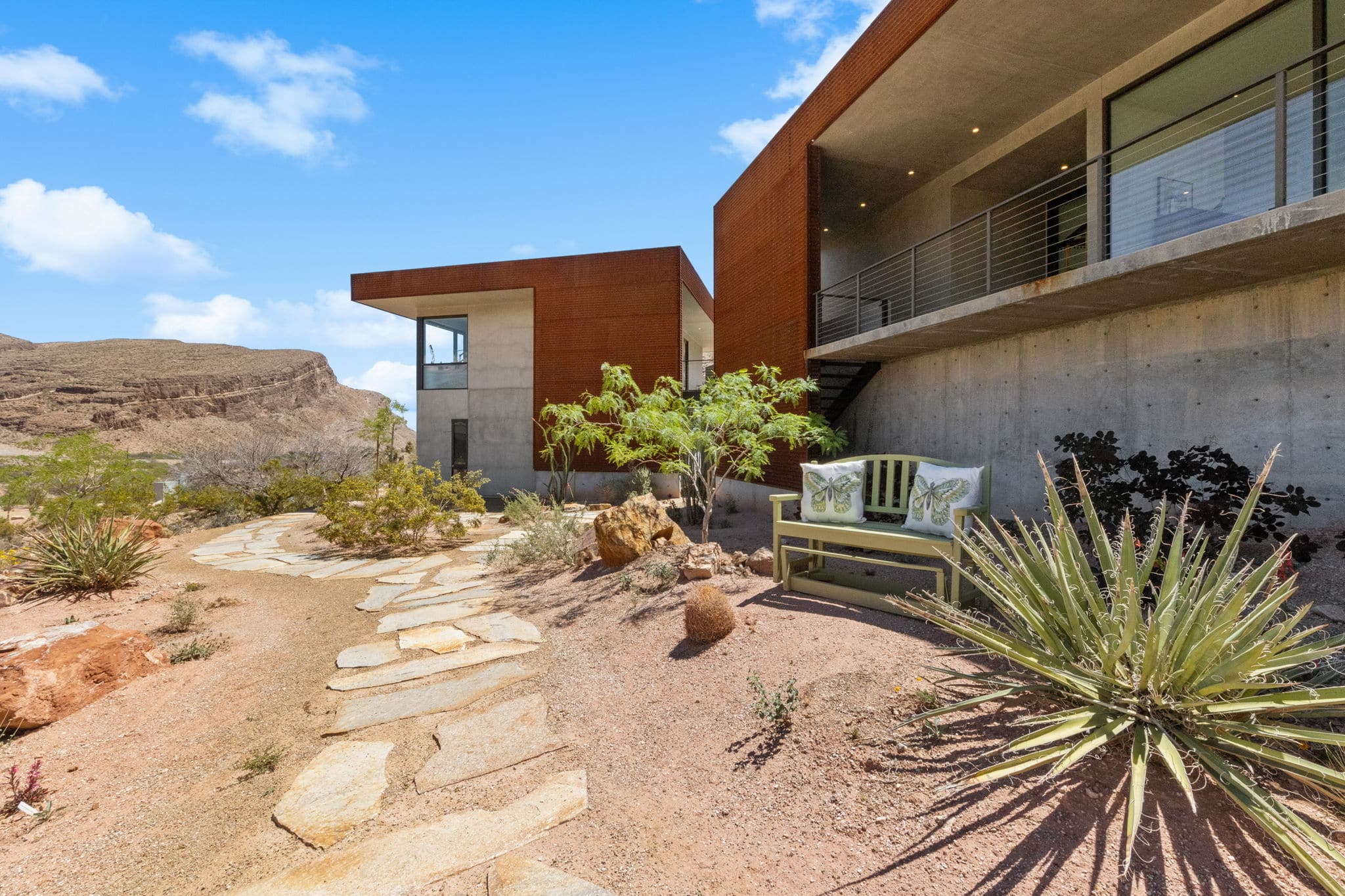
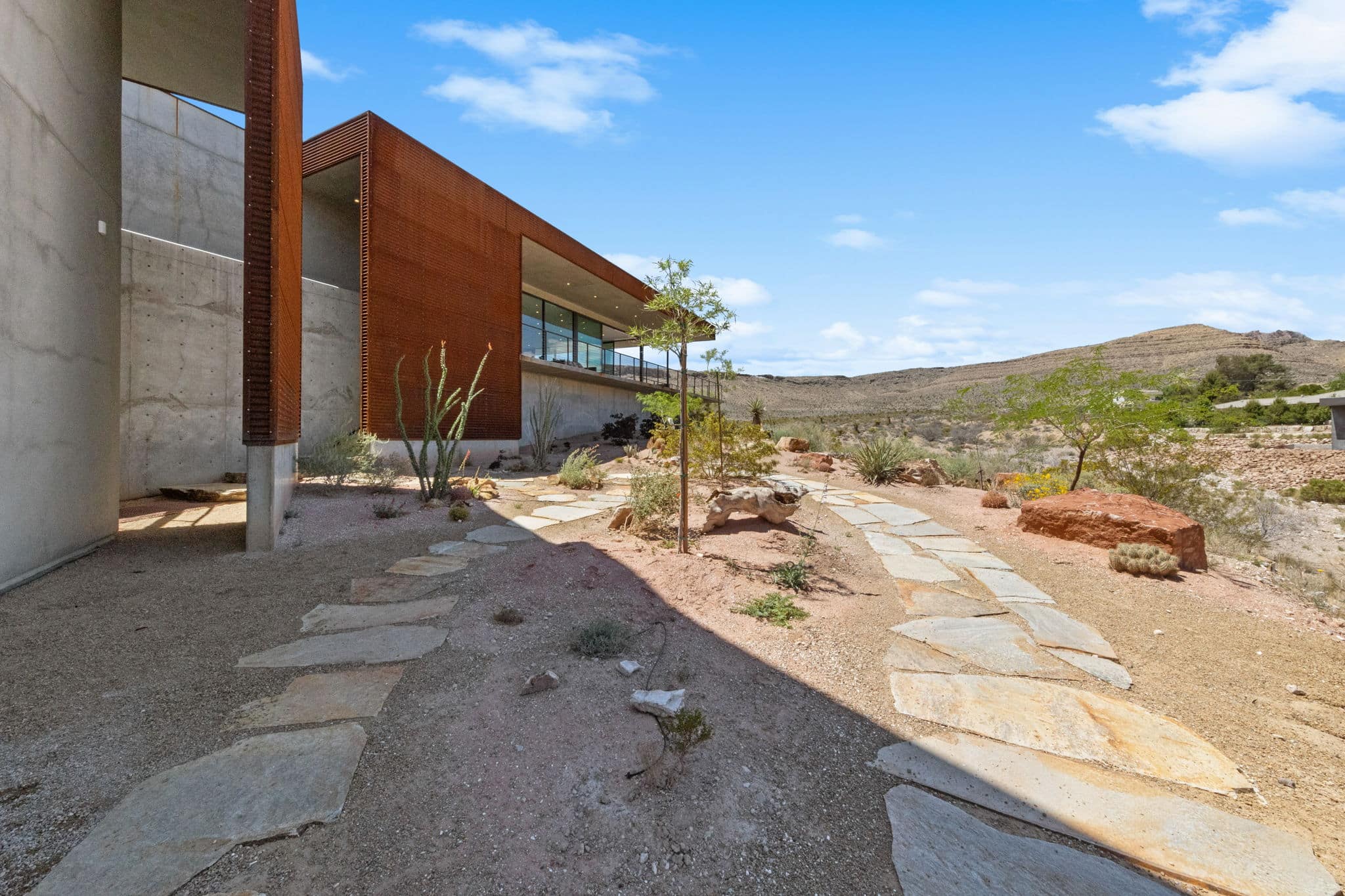
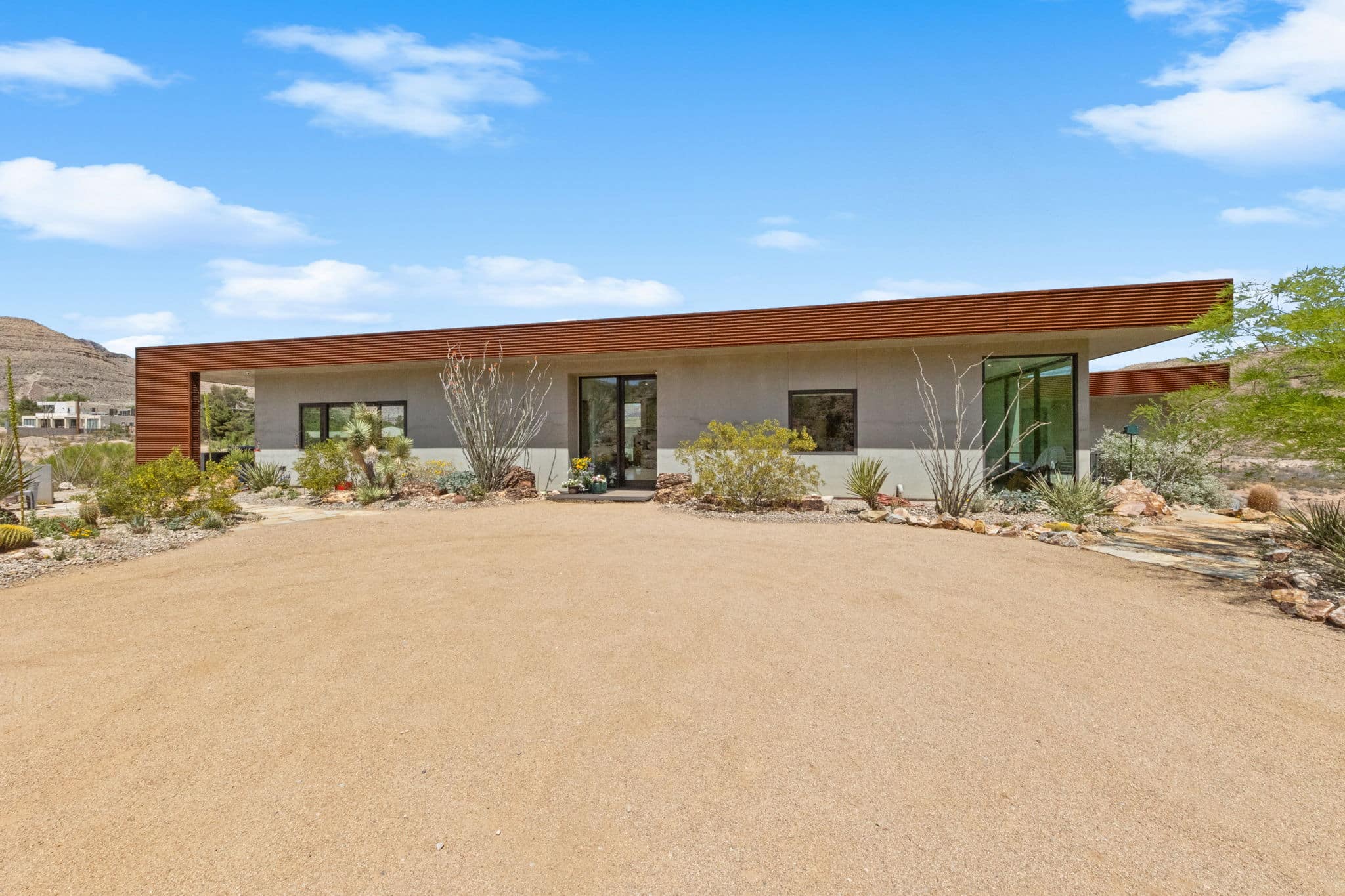
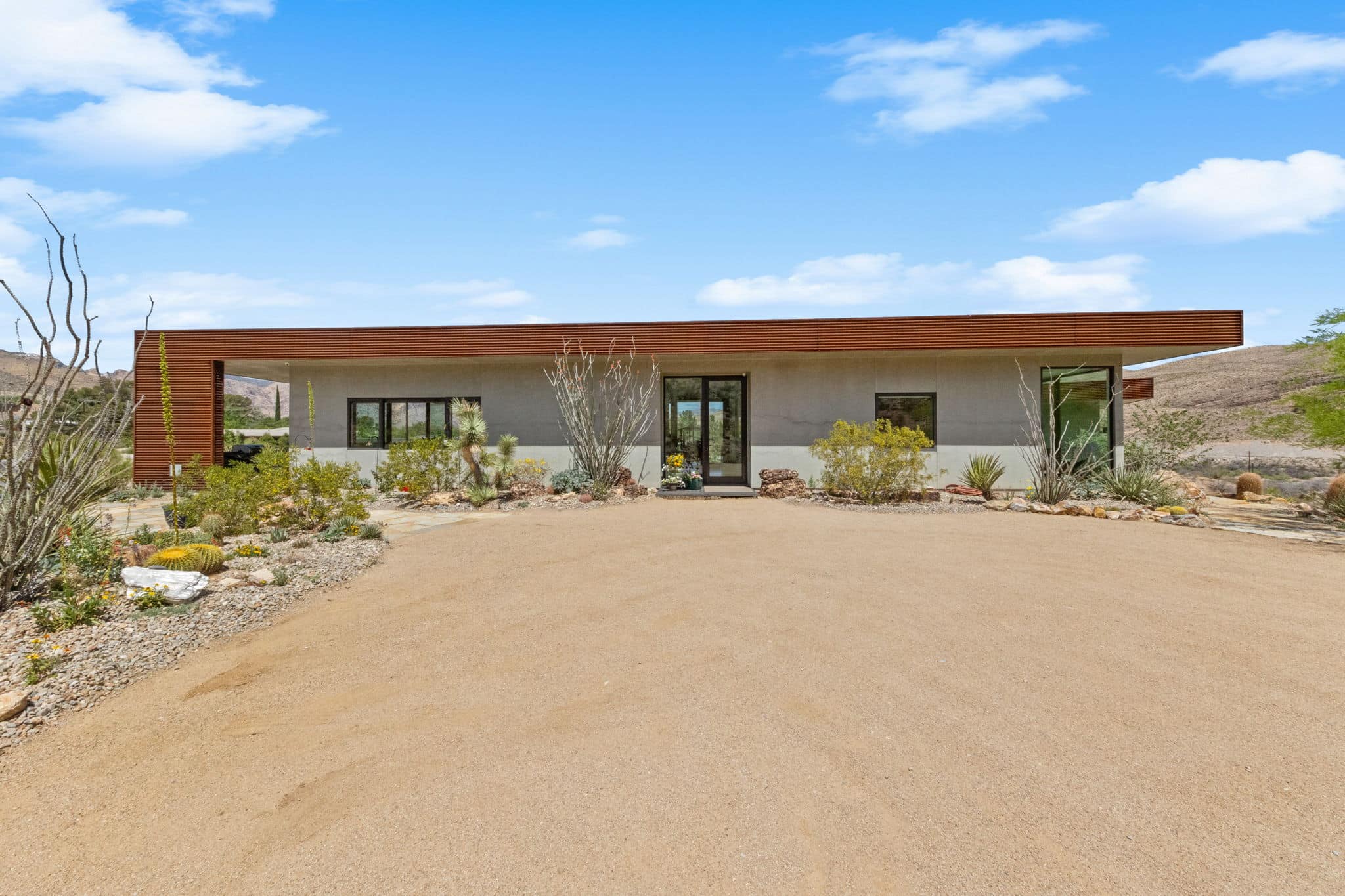
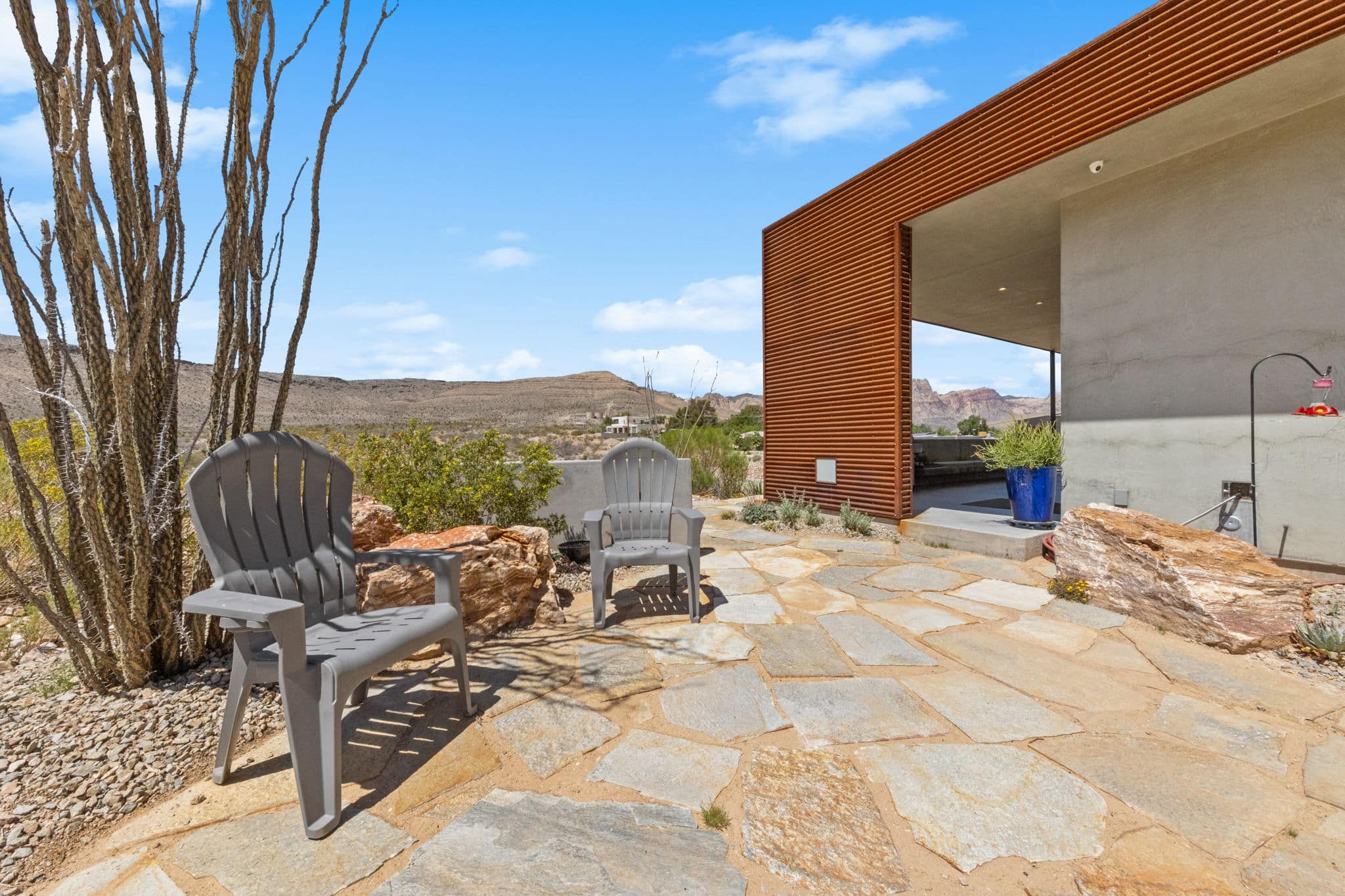
Smaller touches add to the ambiance. In the entry, a shelf of polished, gnarled mesquite immediately reminds you of the desert you just stepped out of, and as you stroll the passage to a rear patio, a slot suddenly opens between two portions of the home, neatly framing the most dramatic rise of Red Rock. Parts of the exterior are clad in corrugated steel, already rusting into an organic color that anchors the house to the landscape, the faint lines of the corrugation picking up the striations on nearby bluffs.
The net effect is of a light-filled sanctuary rich in pleasant interplay between inside and out — perfect for a couple of avid outdoorspeople at home in the desert.
By Scott Dickensheets; Photography by Lucky Wenzel
Published April 1, 2017 at 7:30 PM PDT | Desert Companion


Property Overview
A Sanctuary in the Desert
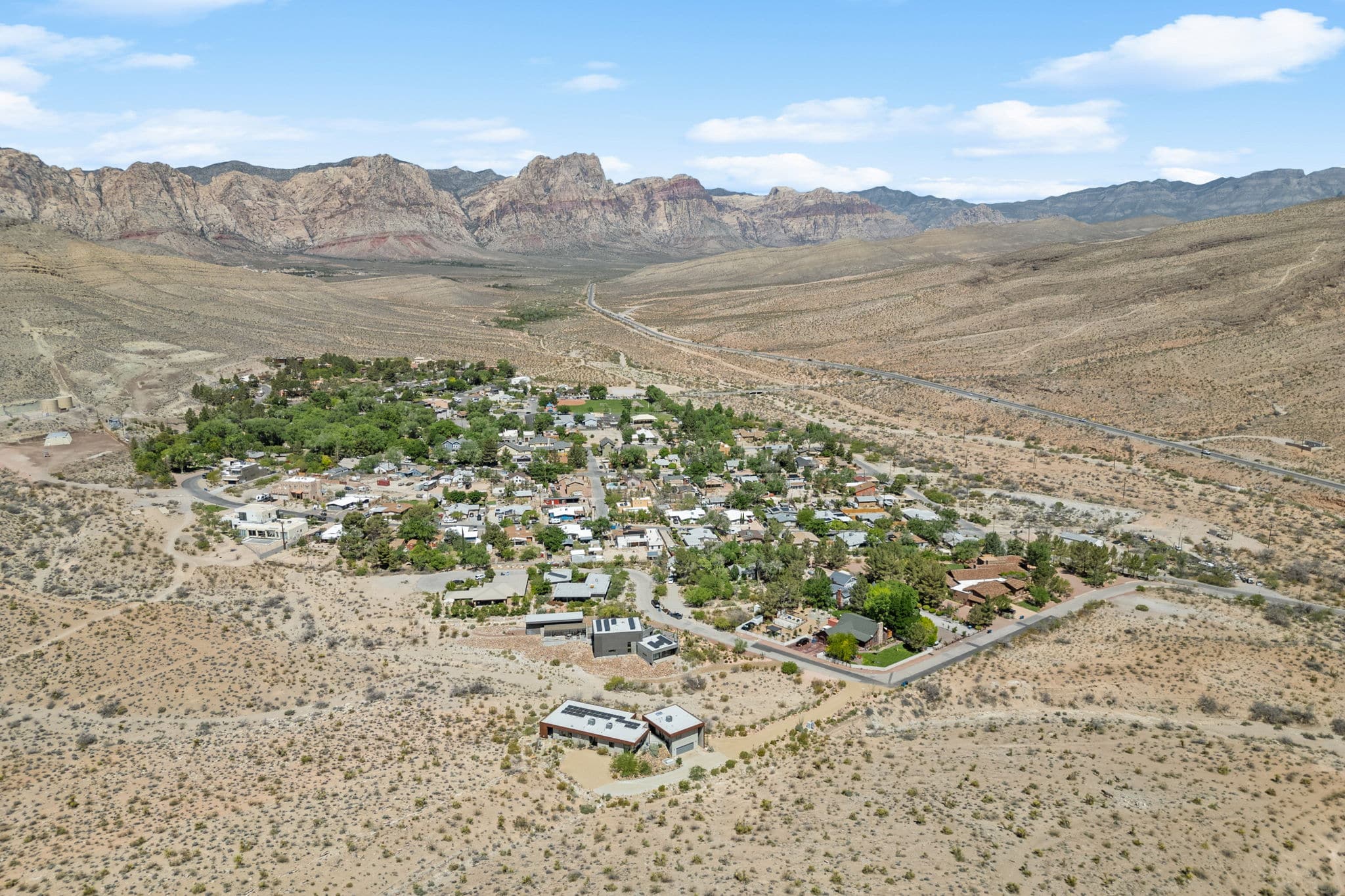
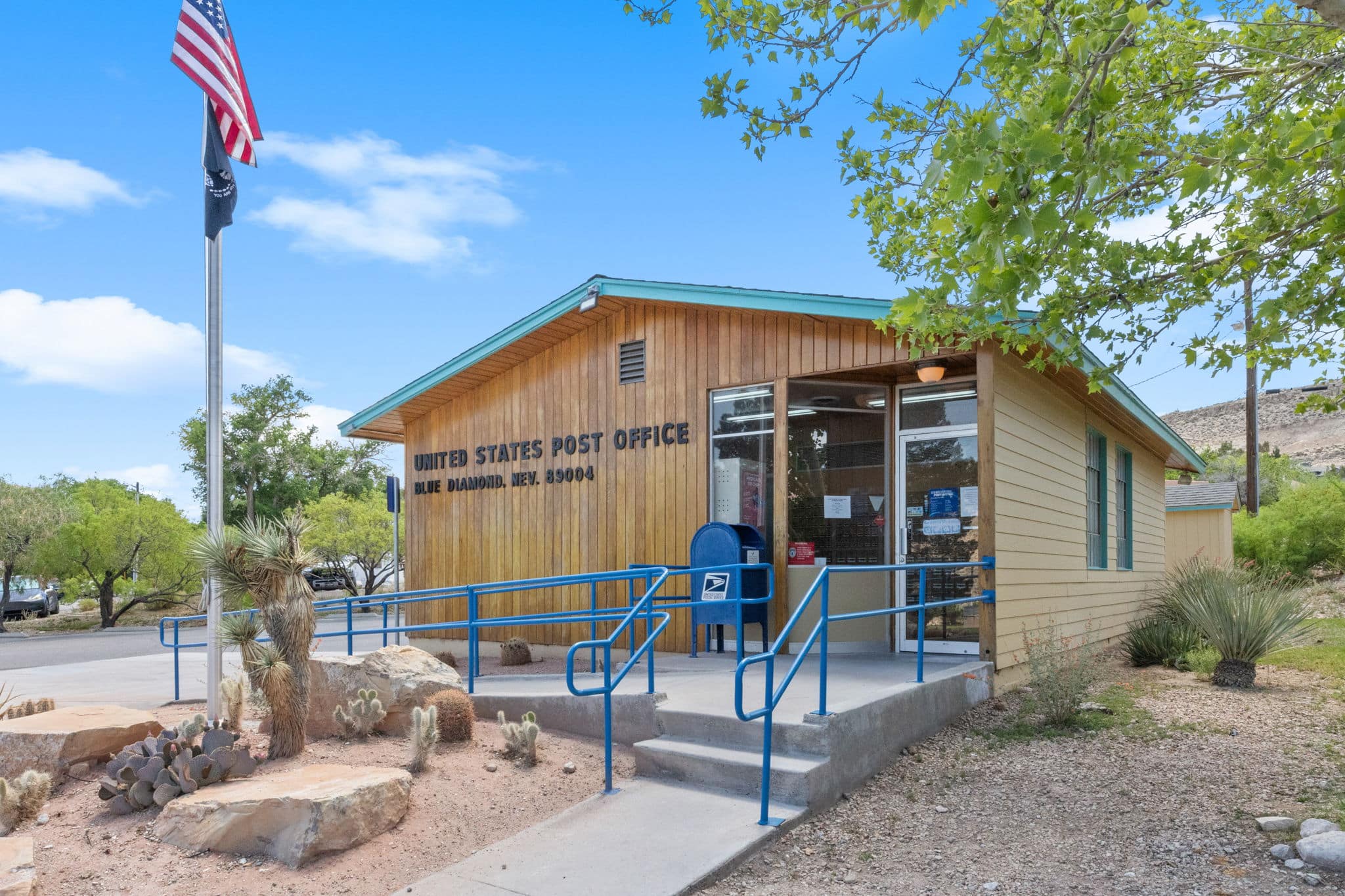
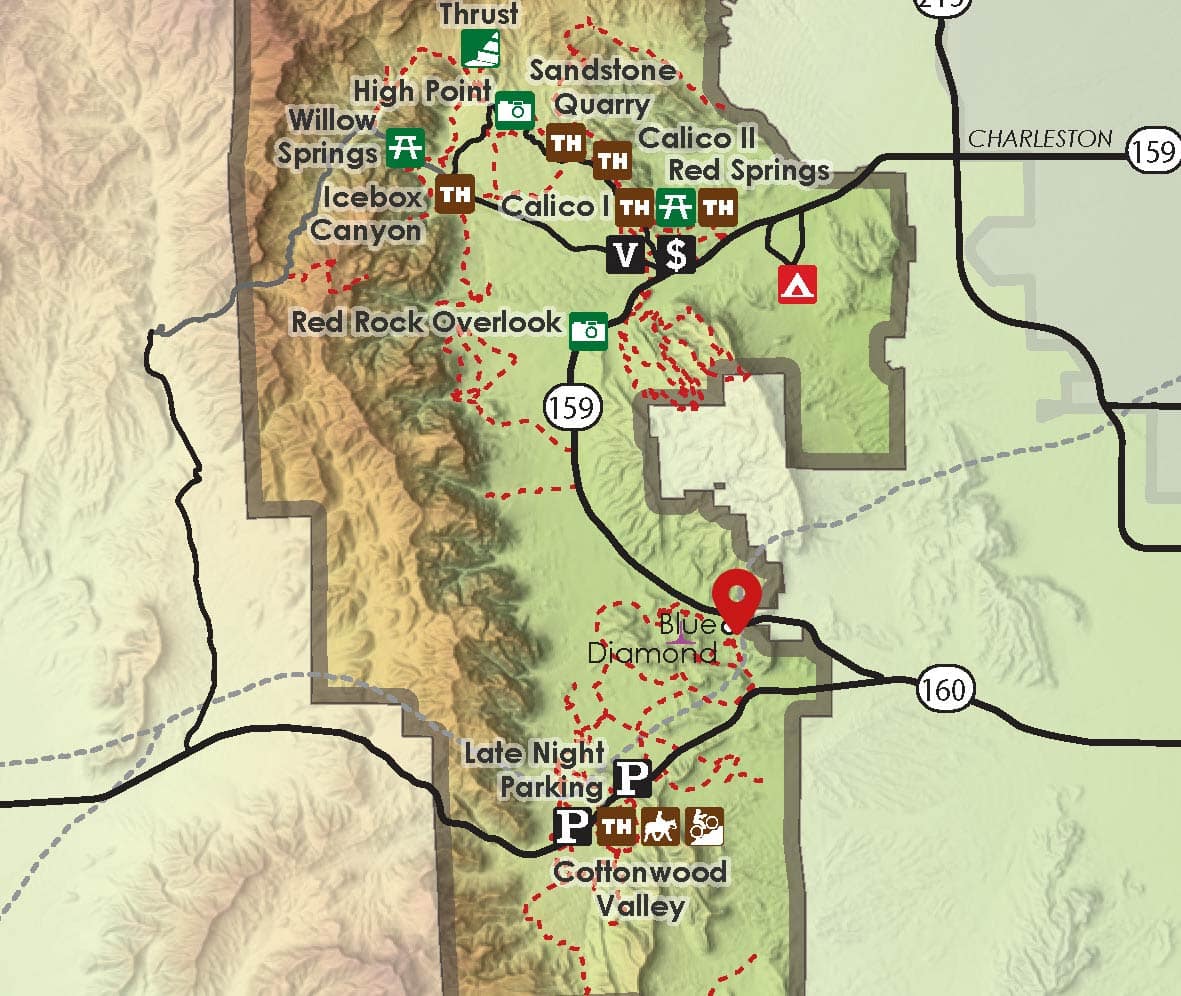
Tucked just miles southwest of the Las Vegas Strip, Blue Diamond is one of Nevada’s most quietly remarkable places – a village of roughly 300 souls where the desert slows down and something genuinely rare takes root: community. Originally known as Cottonwood Springs, the village served as a stop on the Old Spanish Trail for traders making the long journey between Santa Fe and California, and that sense of being a welcome waypoint for wanderers never quite left. In the early 1920s, the Blue Diamond Gypsum Company arrived, opened a mine, and built housing for workers and their families – laying the foundation for a tight-knit neighborhood that has endured and flourished for over a century.
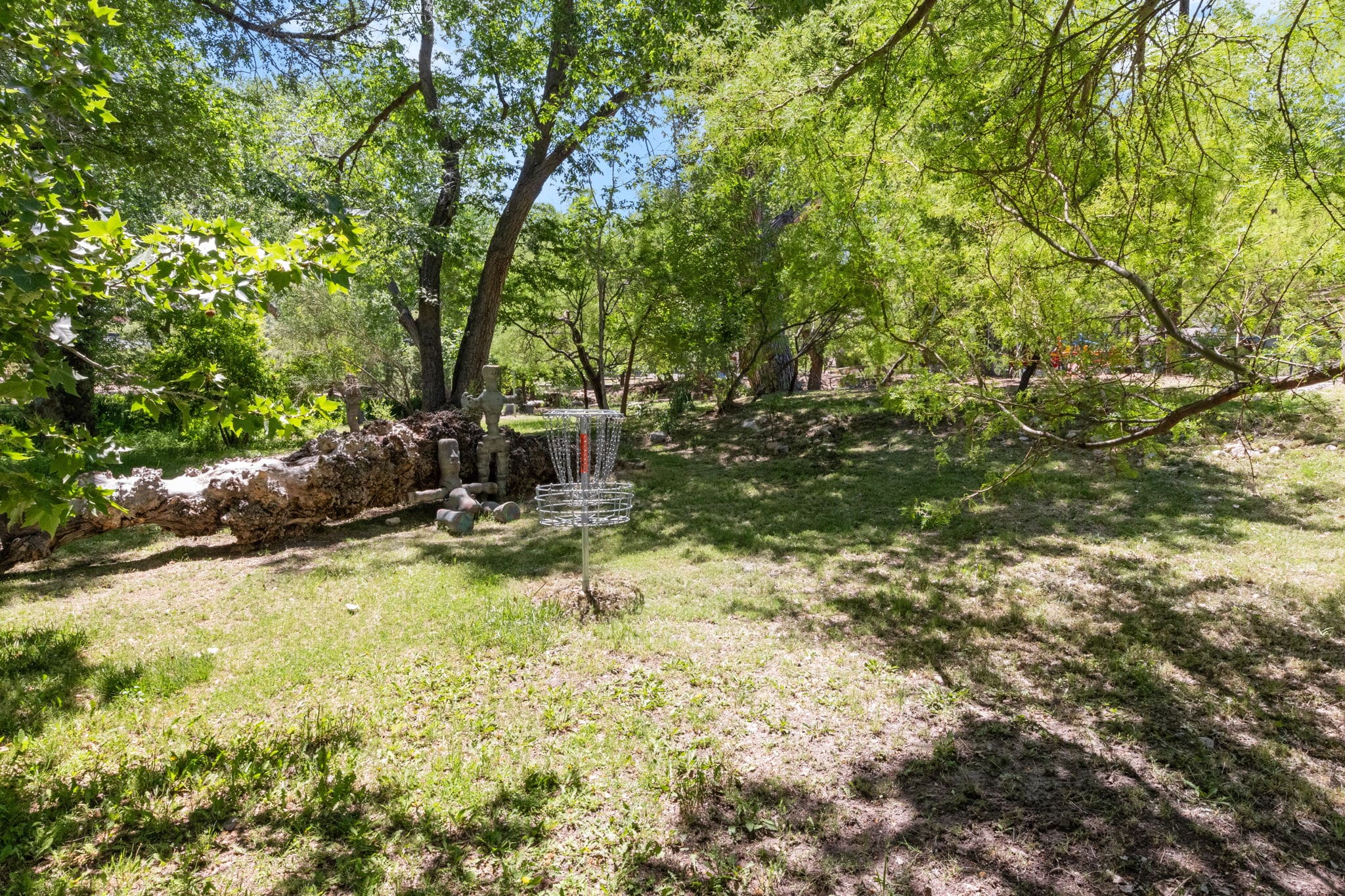
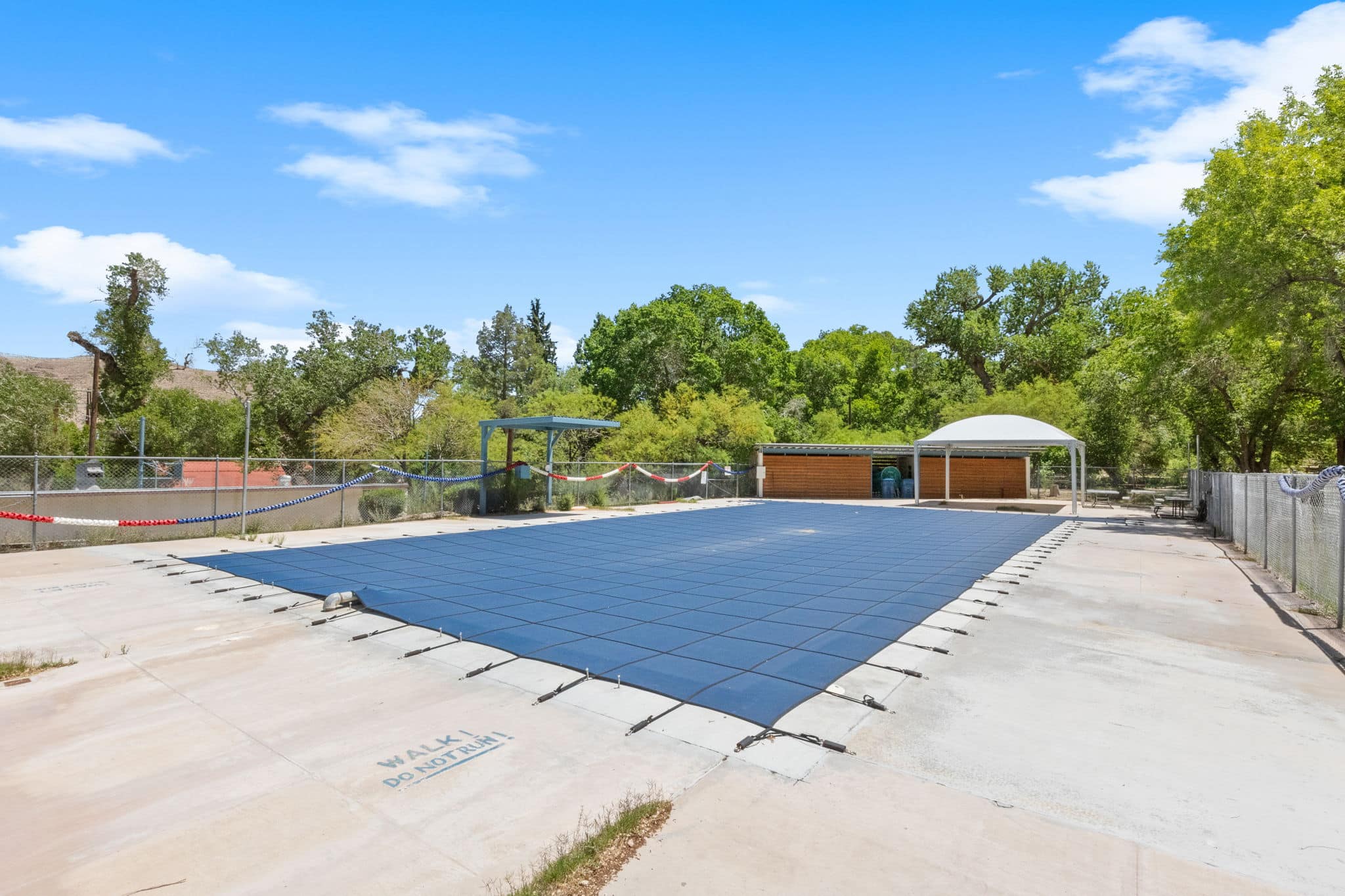
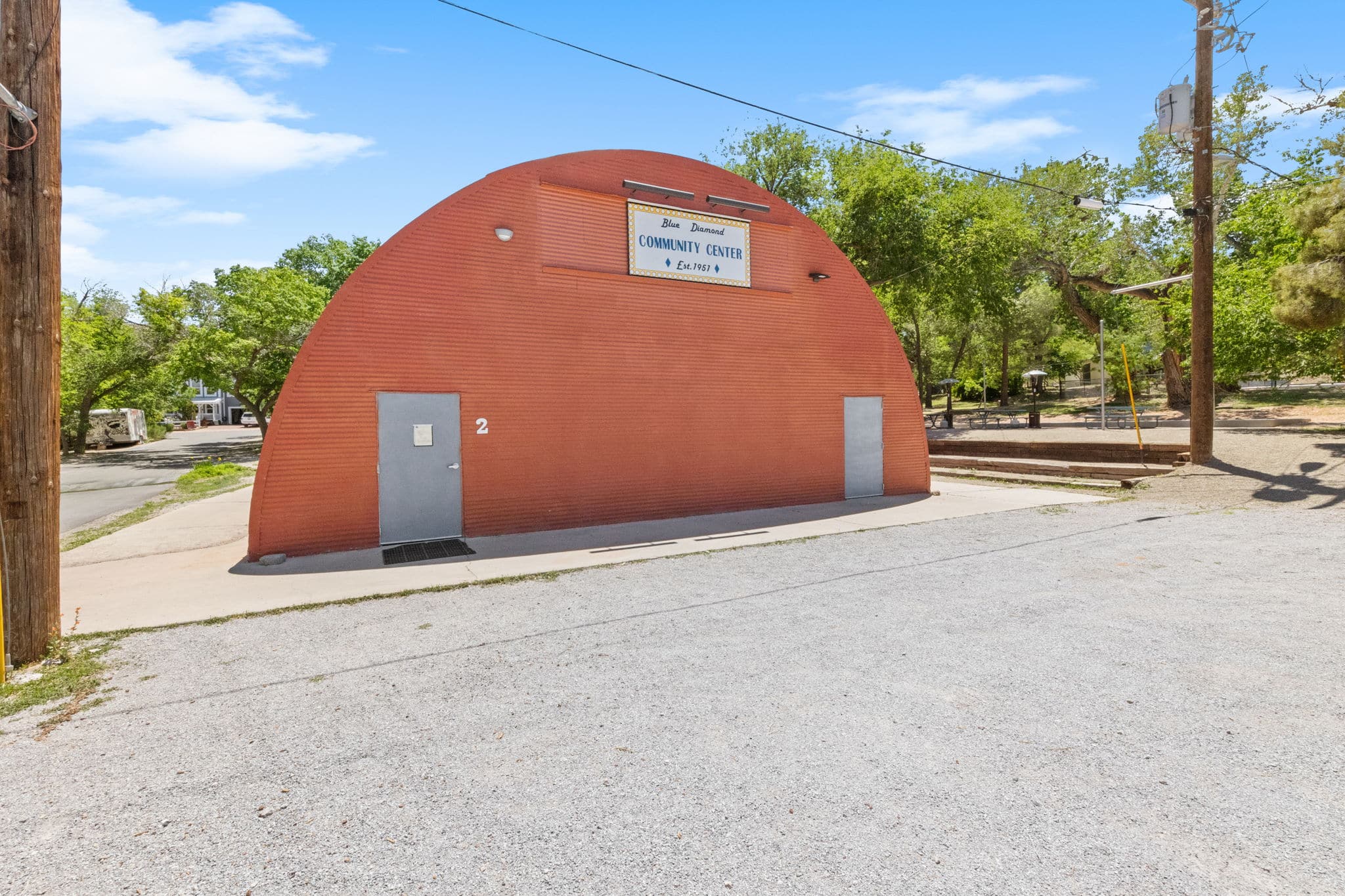
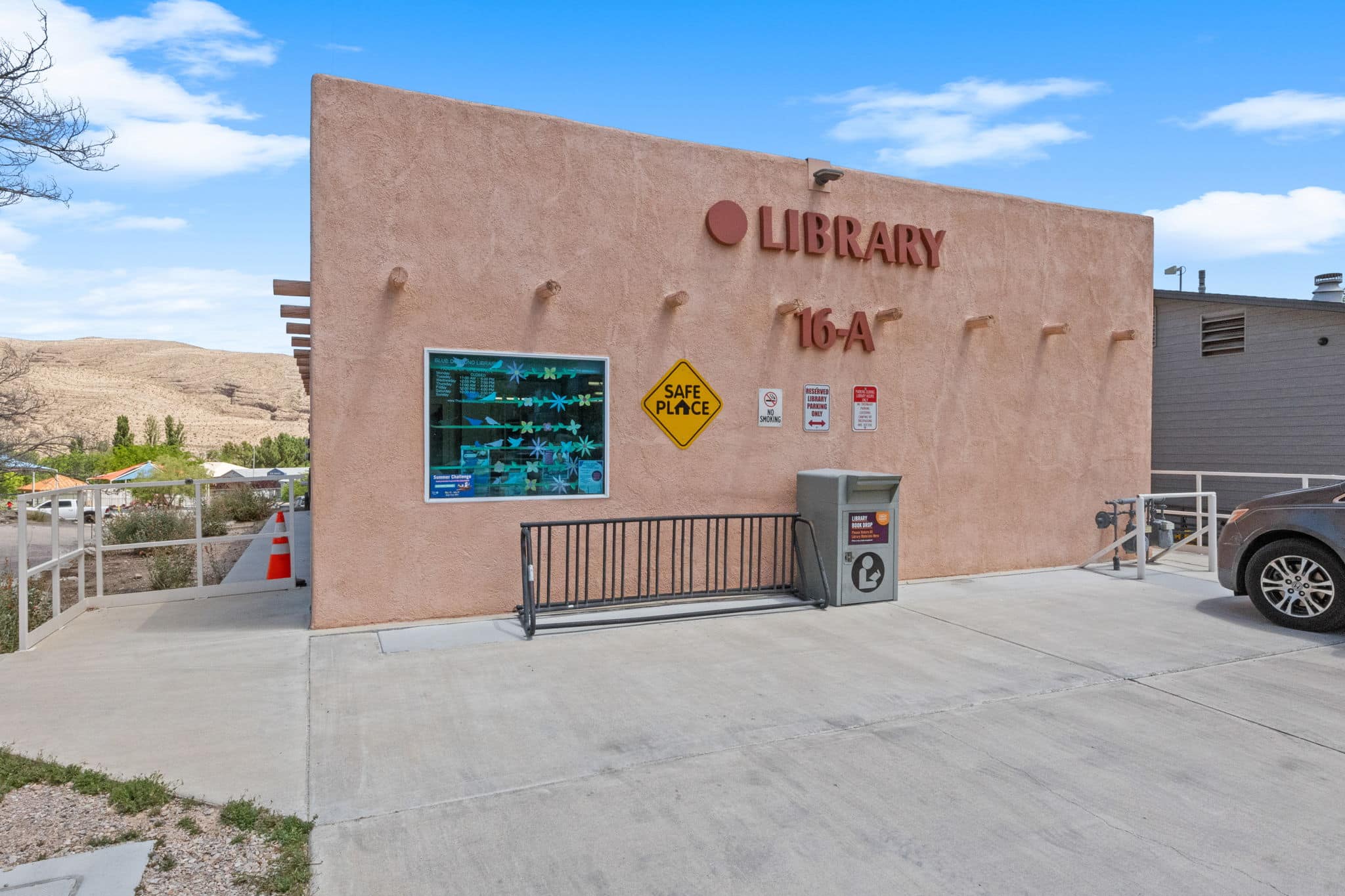
What makes Blue Diamond so special is not what it has, but what it has chosen to remain. The town’s welcome sign says it all: “Blue Diamond NV, population: low, elevation: high, Burros: ?” While developers have long cast eyes on the surrounding hills, residents have steadfastly guarded their unhurried way of life. The community gathers around a park, a library, an elementary school, an event hall, and the beloved marcantile – a general store built in 1942 whose walls are lined with historical photos curated by an all-volunteer historical society. The sense of serenity and closeness is hard to find anywhere else, and the people of Blue Diamond know it and protect it fiercely.
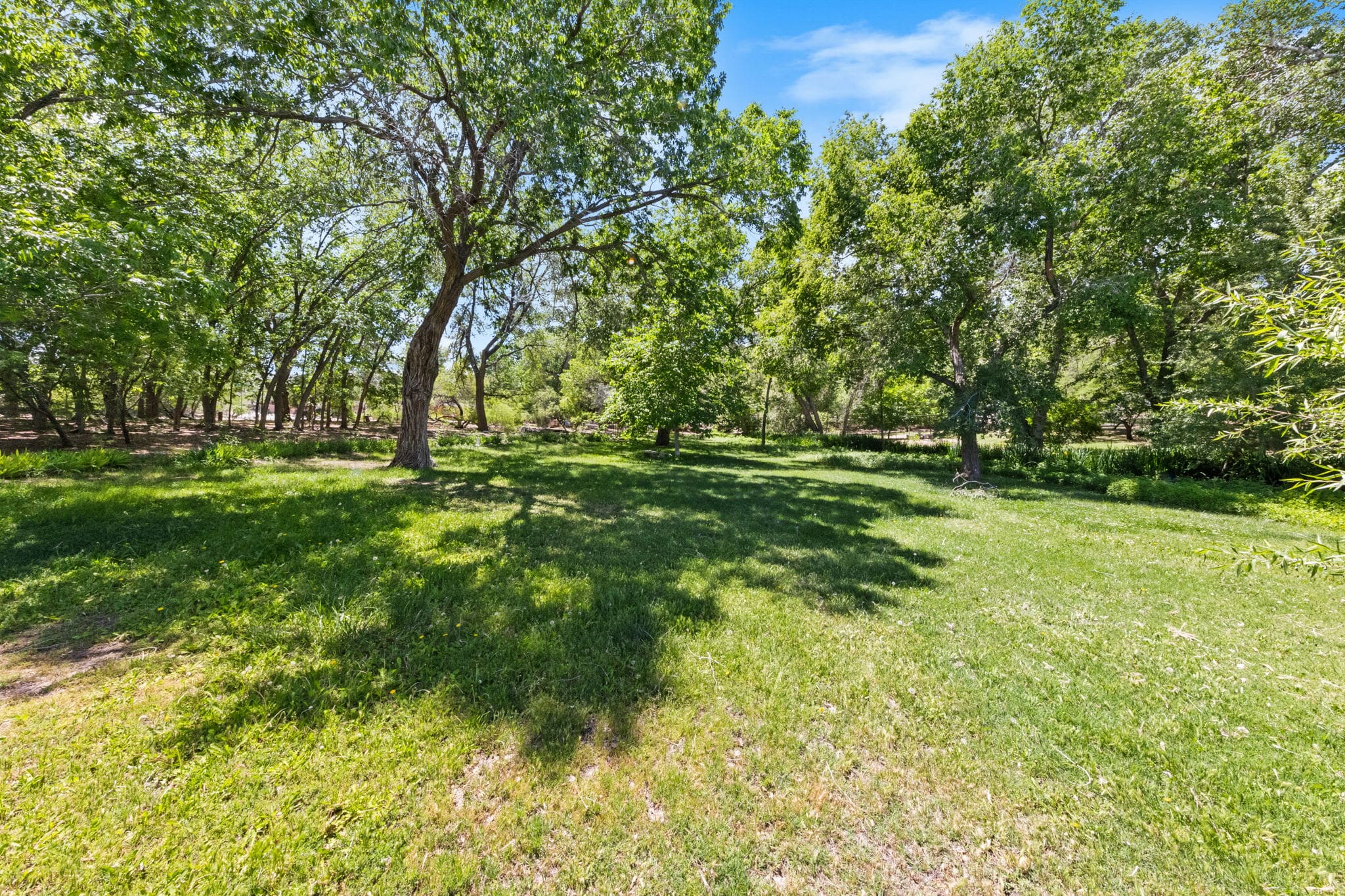
Then there is the setting – and what a setting it is. Blue Diamond sits within the boundaries of the Red Rock Canyon National Conservation Area, Nevada’s first National Conservation Area, preserving over 195,000 acres of stunning Mojave Desert landscape with a 13-mile scenic drive, more than 60 miles of hiking trails, and hidden waterfalls. Its modest streets are shaded by cottonwoods while wild burros meander through the park. Today’s residents enjoy the quiet, the stars at night, coyotes serenading the full moon, and the rich tapestry of this beautiful place – a living reminder that not everything extraordinary in Nevada comes with neon lights.
59 Arroyo Road
- Location: Blue Diamond, NV
- Property Type: Rural Estate
- Bedrooms: 3
- Bathrooms: 2.5
- Interior Area: 3,042 sqft
- Lot Size: 1.3 Acres


Hoogland Architecture designs Arroyo House for stark desert site in southern Nevada
By Jenna McKnight | Photography by Stephen Morgan
31 August 2018 | Dezeen
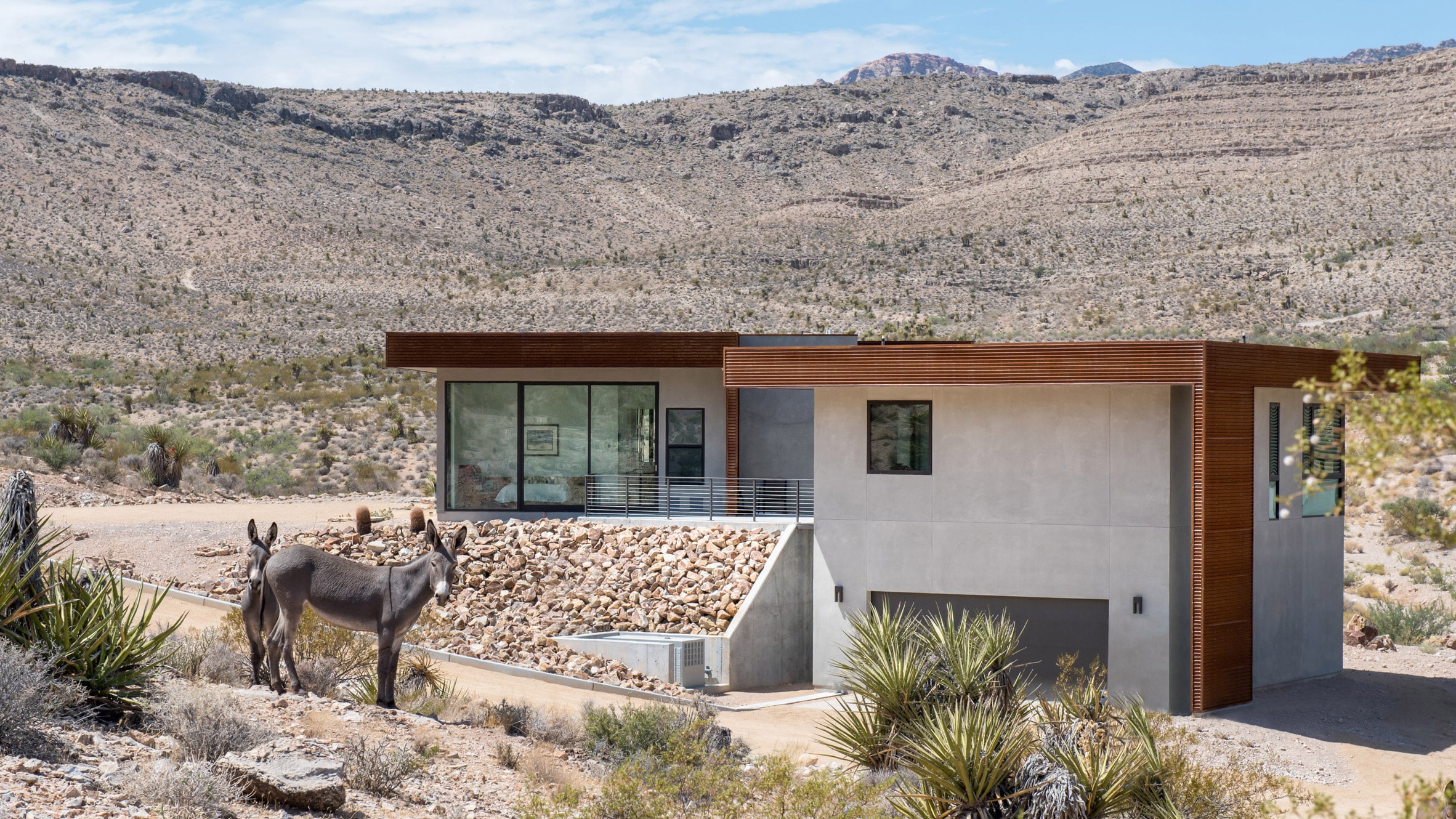
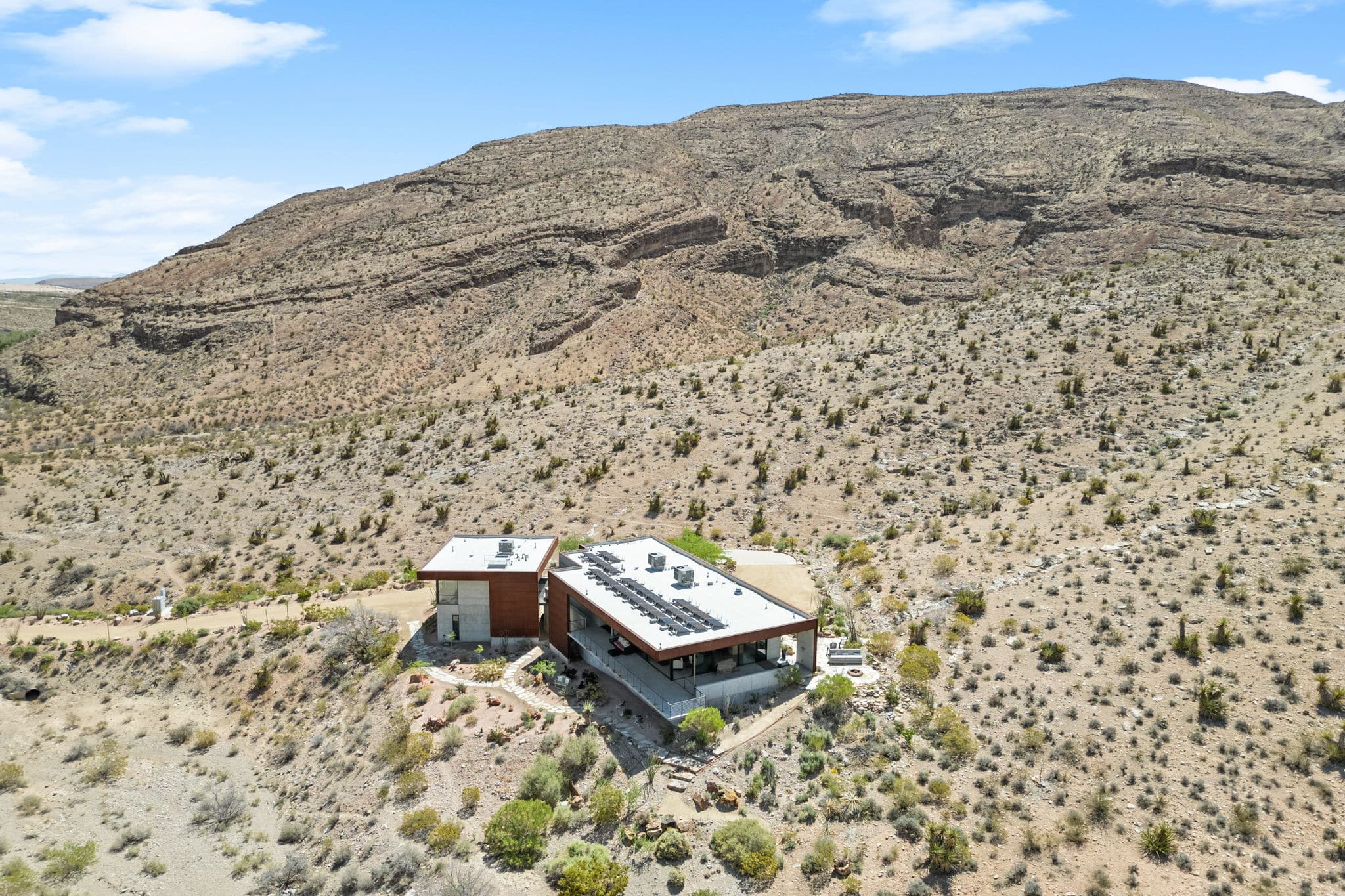
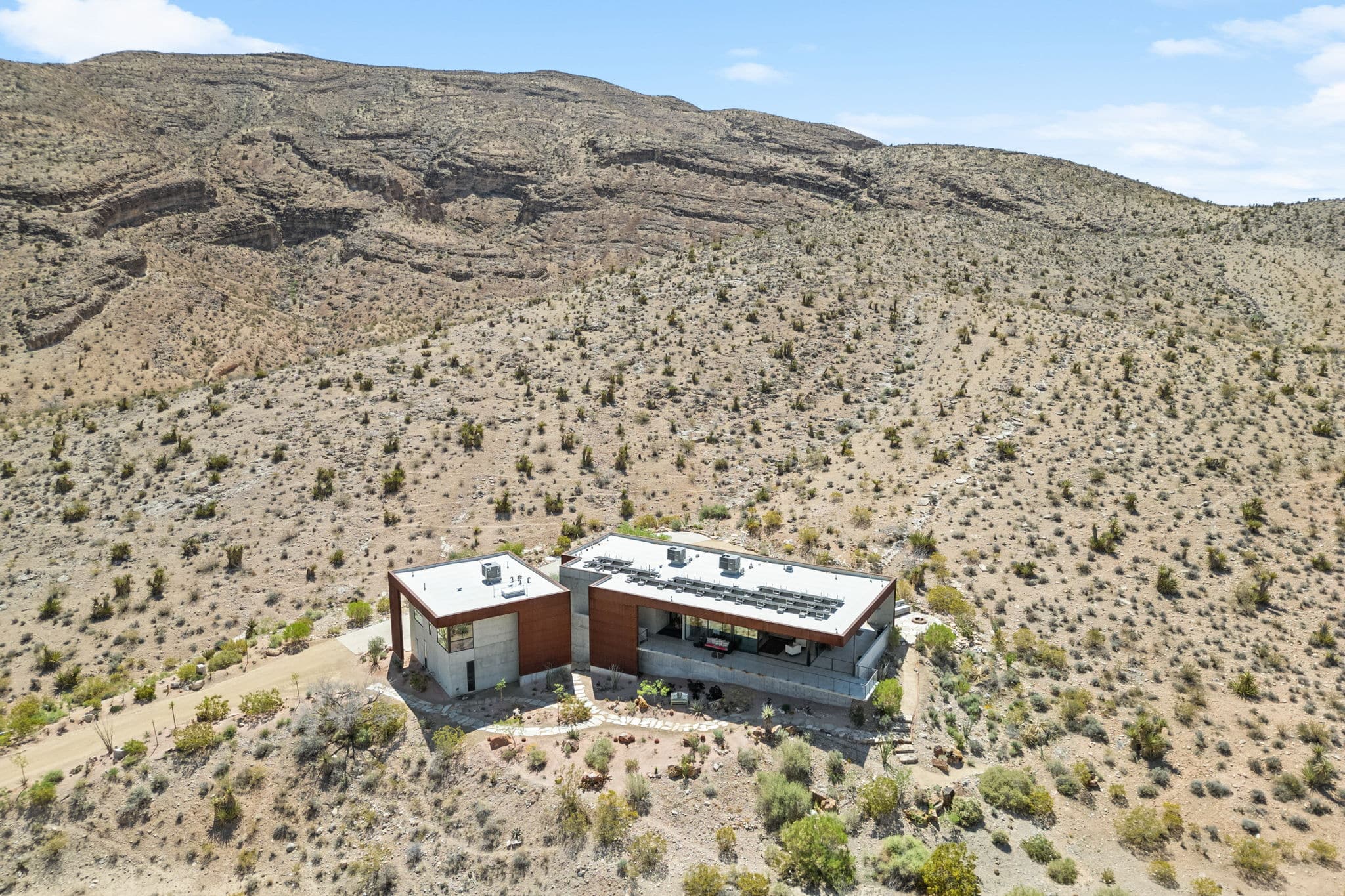
American firm Hoogland Architecture has conceived a low-lying concrete residence wrapped in weathering steel, for an active couple who hope to remain in the Mojave Desert home as they age.
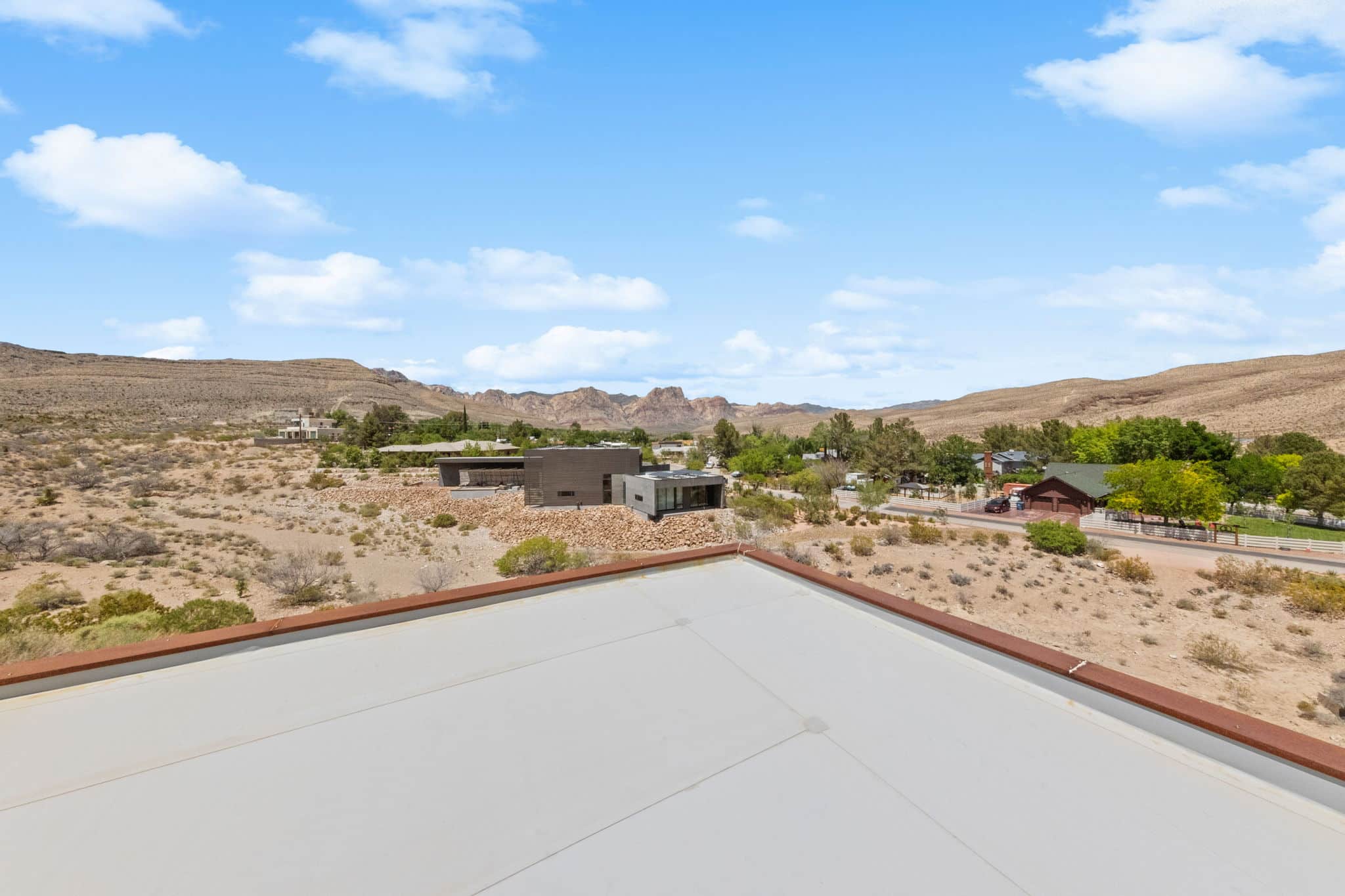
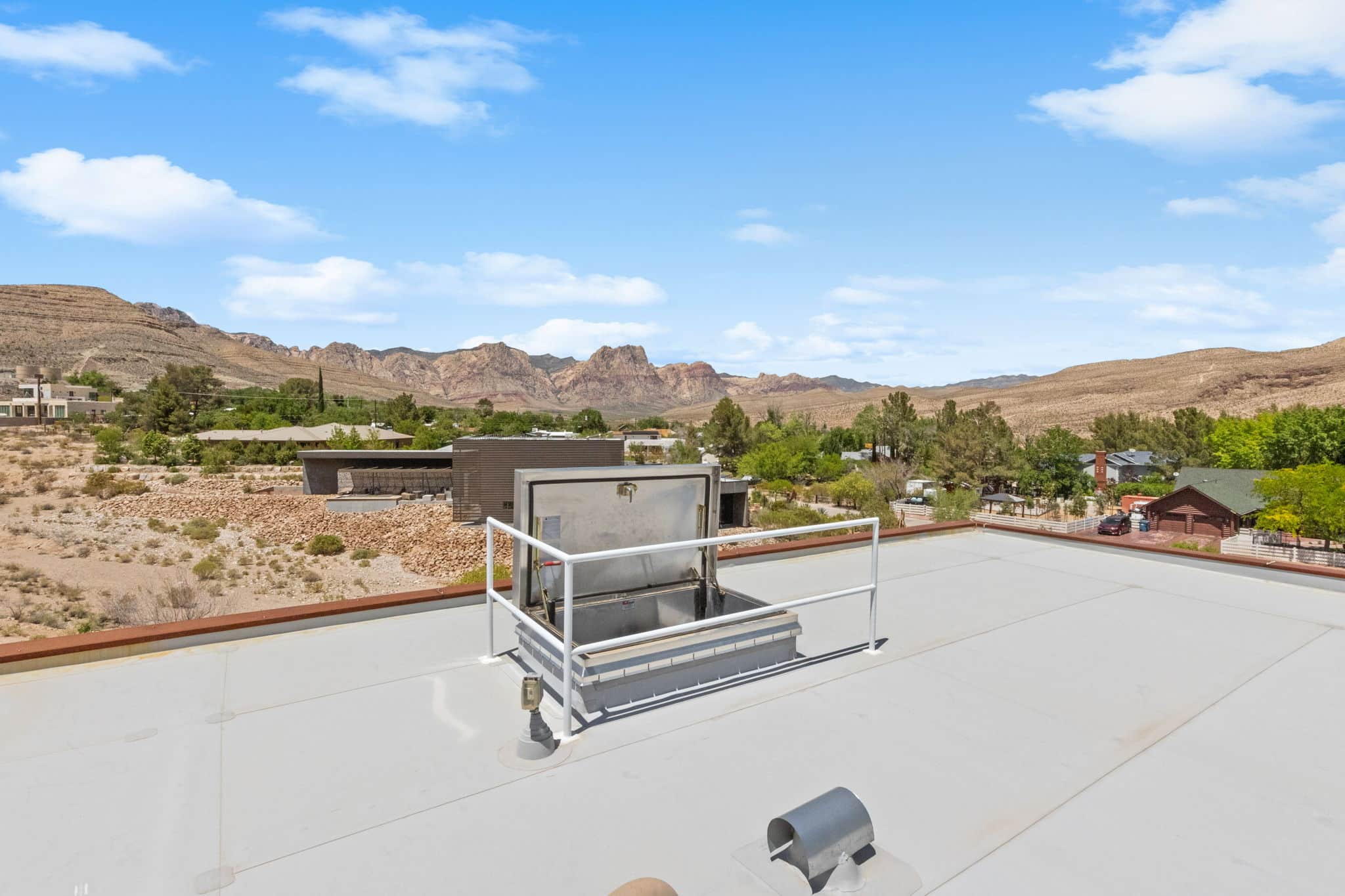
The Arroyo House is located in Blue Diamond, a hamlet just outside Las Vegas in the Mojave Desert. The small community is situated near an active gypsum mine, and also lies within close proximity of Red Rock Canyon – a conservation area that is popular with hikers and rock climbers.
The home was envisioned as a “base camp” for an active couple who are nearing retirement.
“After recently relocating to the Las Vegas area, their love of all things outdoors convinced them to make their home in the tiny village of Blue Diamond,” said local studio Hoogland Architecture in a project description.
“While only minutes from Las Vegas, Blue Diamond is a half-mile-wide by half-mile-long hamlet, surrounded by some of the most iconic landscapes and sought-after rock outcroppings in the US.”
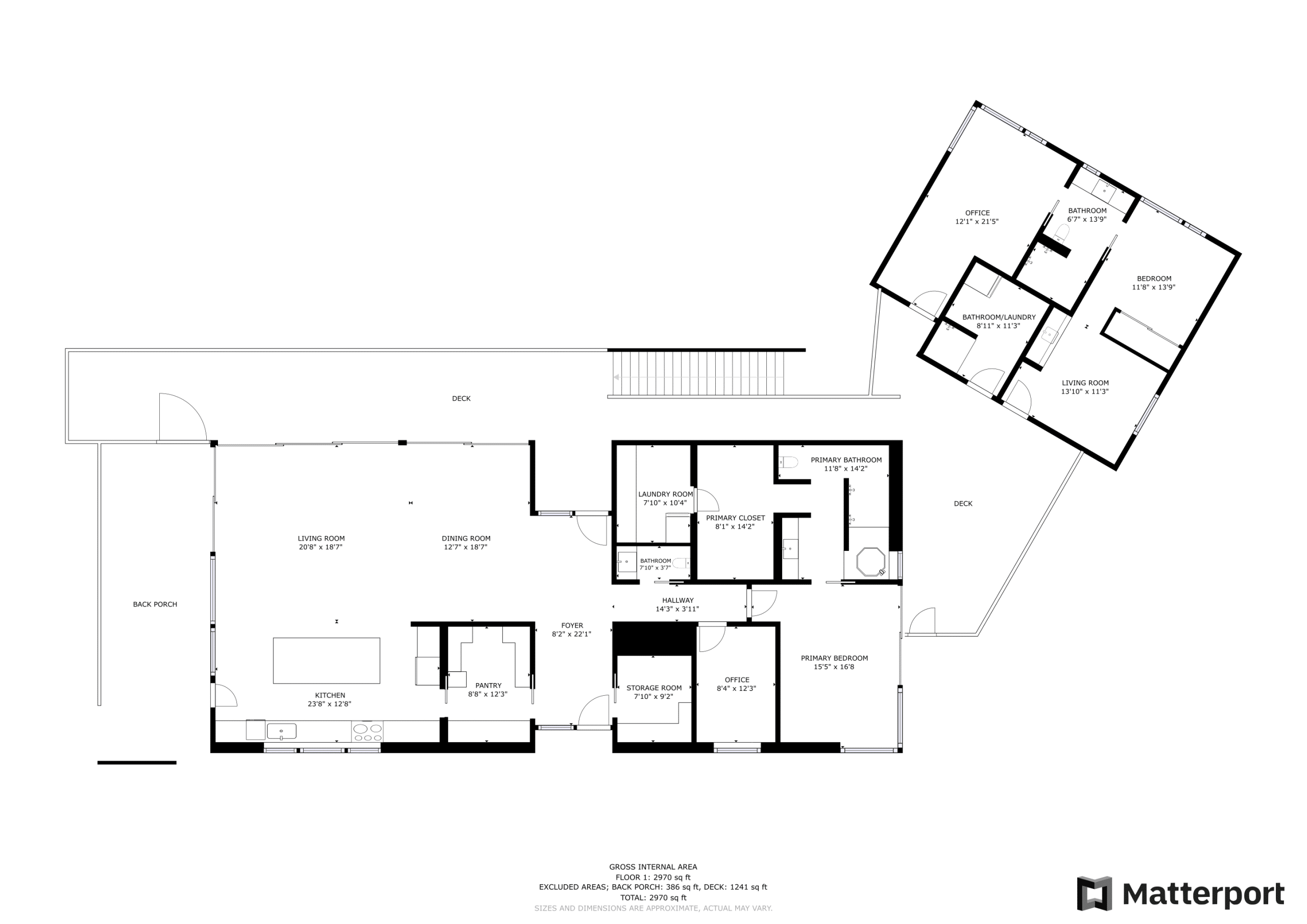
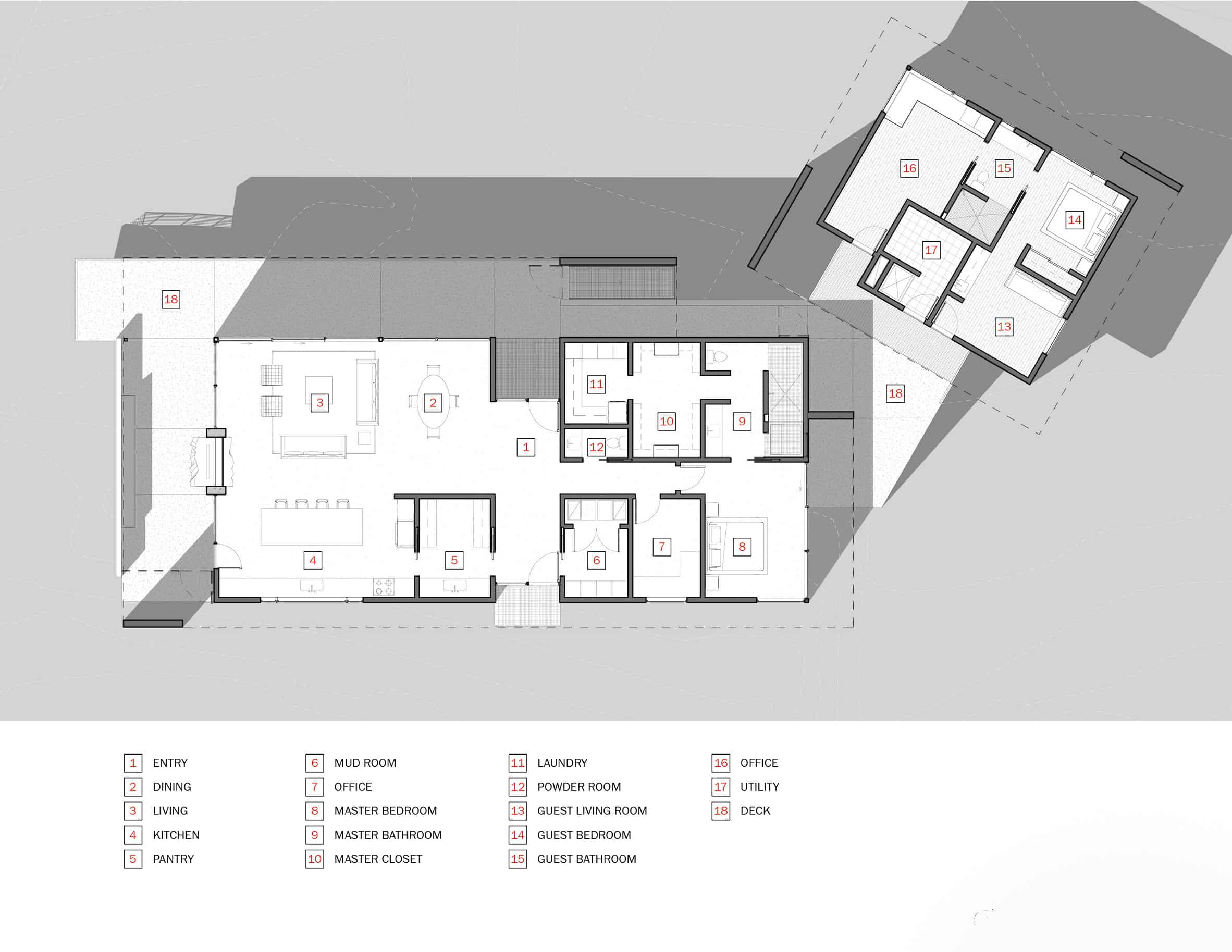
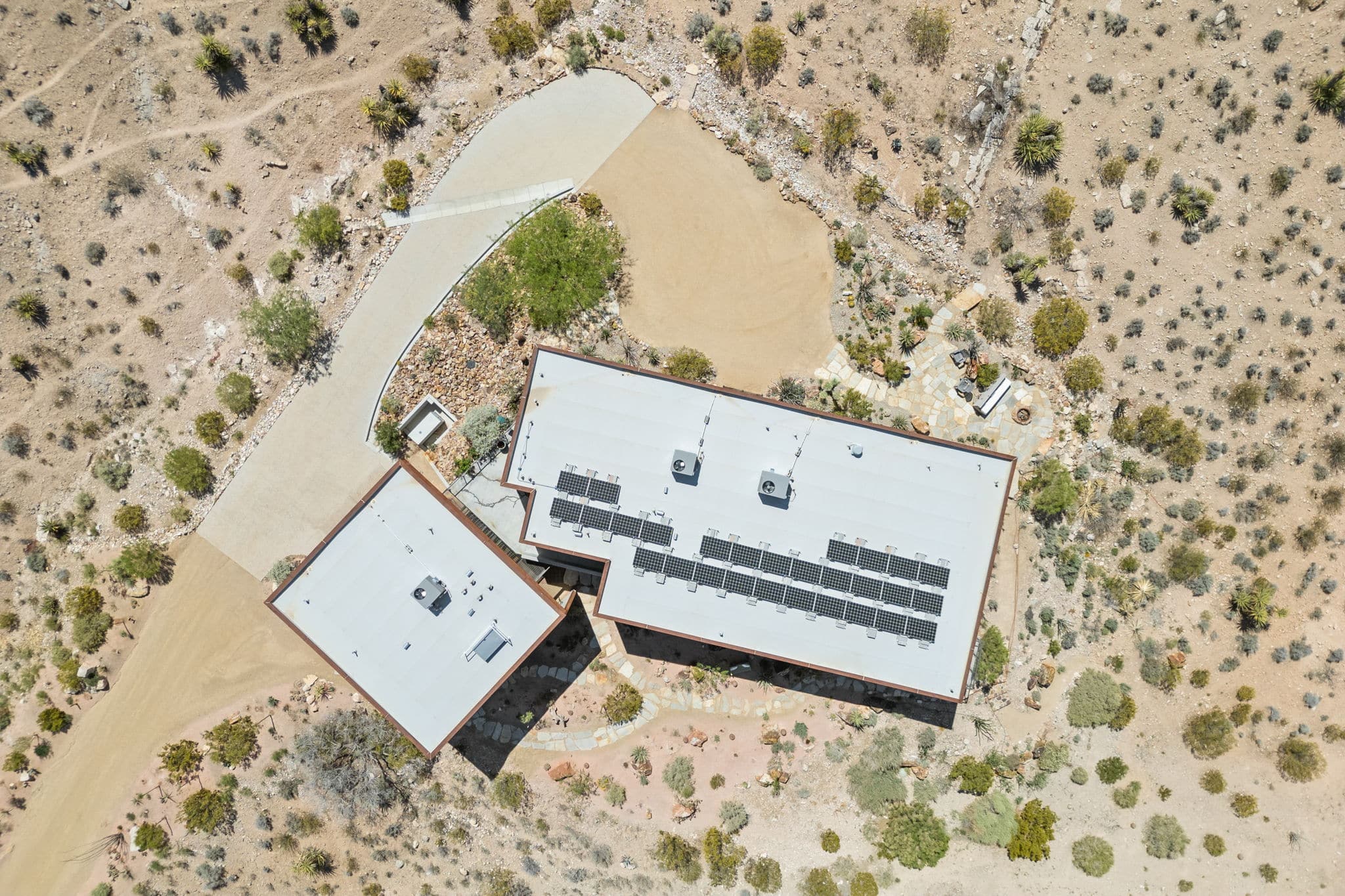
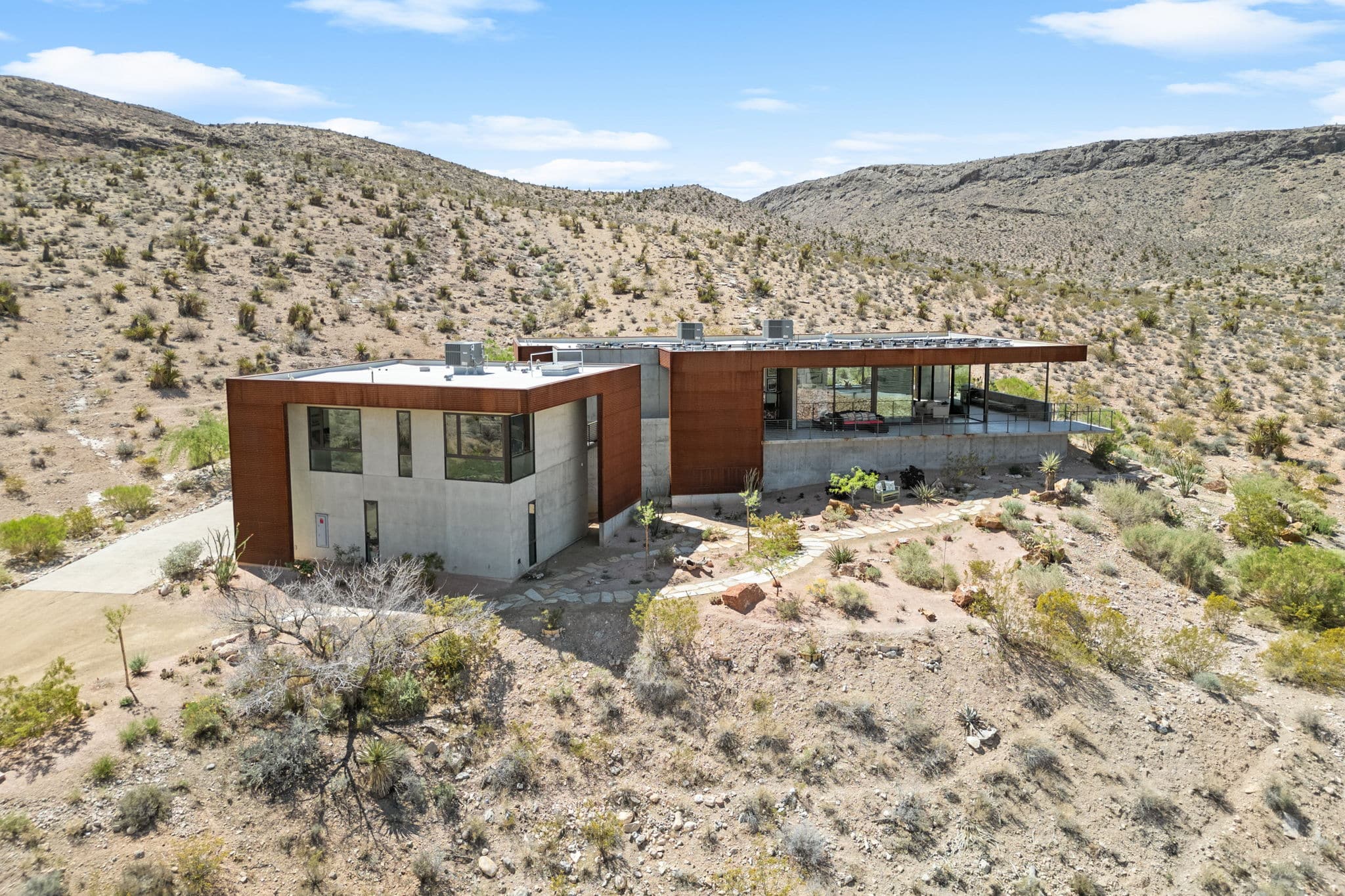
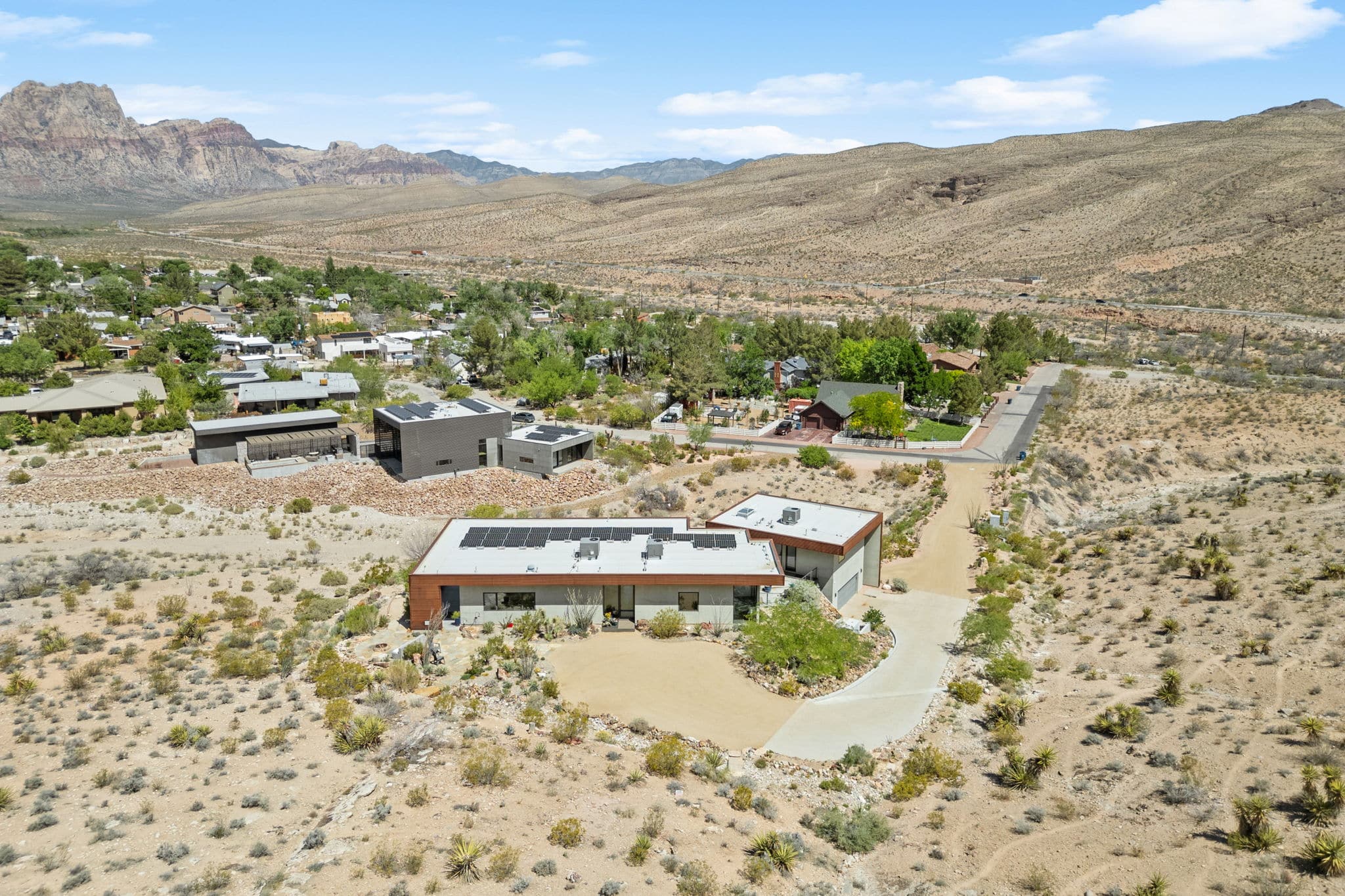
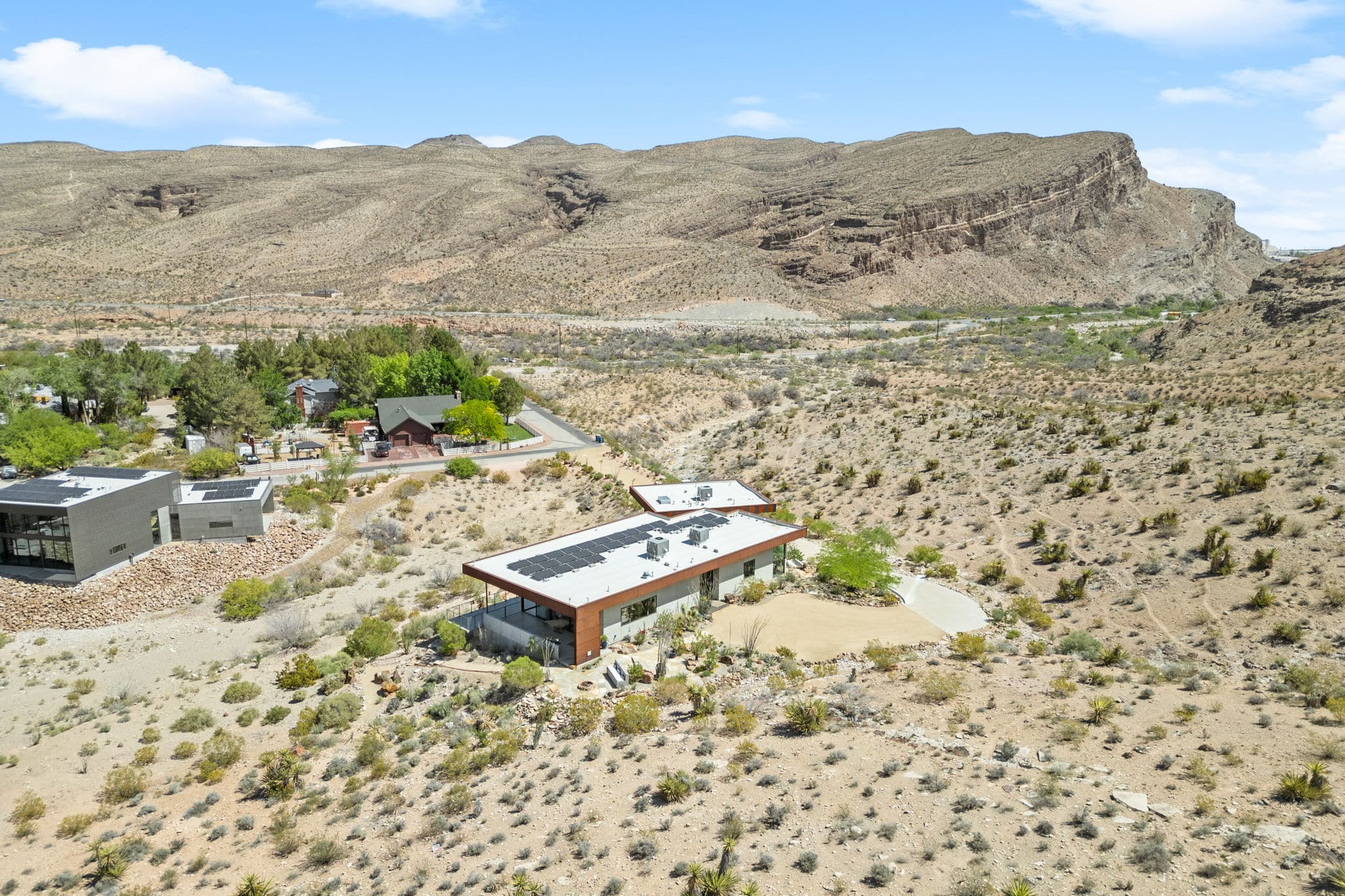
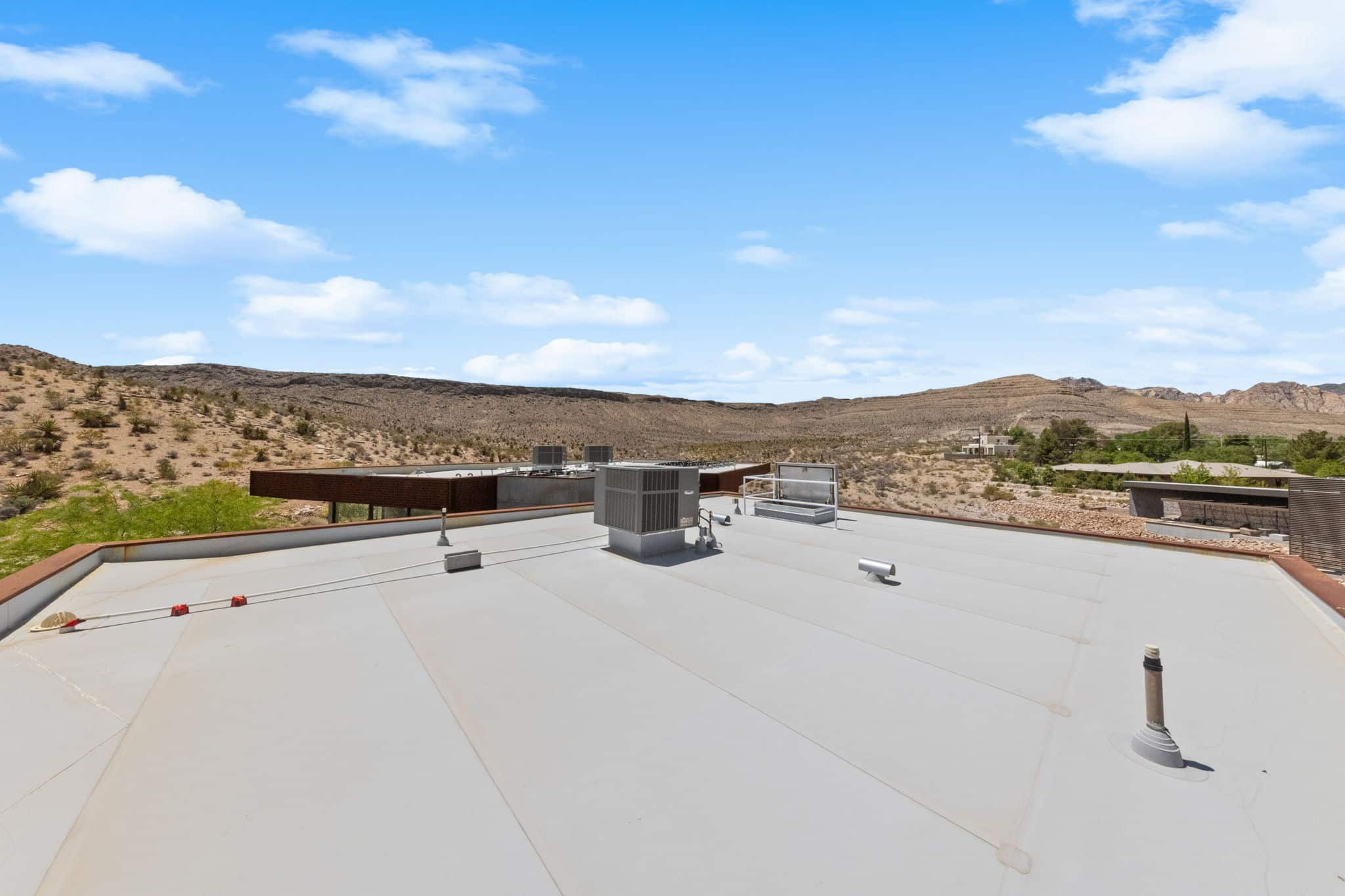
The 3,875-square-foot (360-square-metre) dwelling was built on a sloped site near a natural wash, called an arroyo. For the austere desert site, the architects conceived a low-lying residence that consists of two rectilinear volumes connected by a deck.
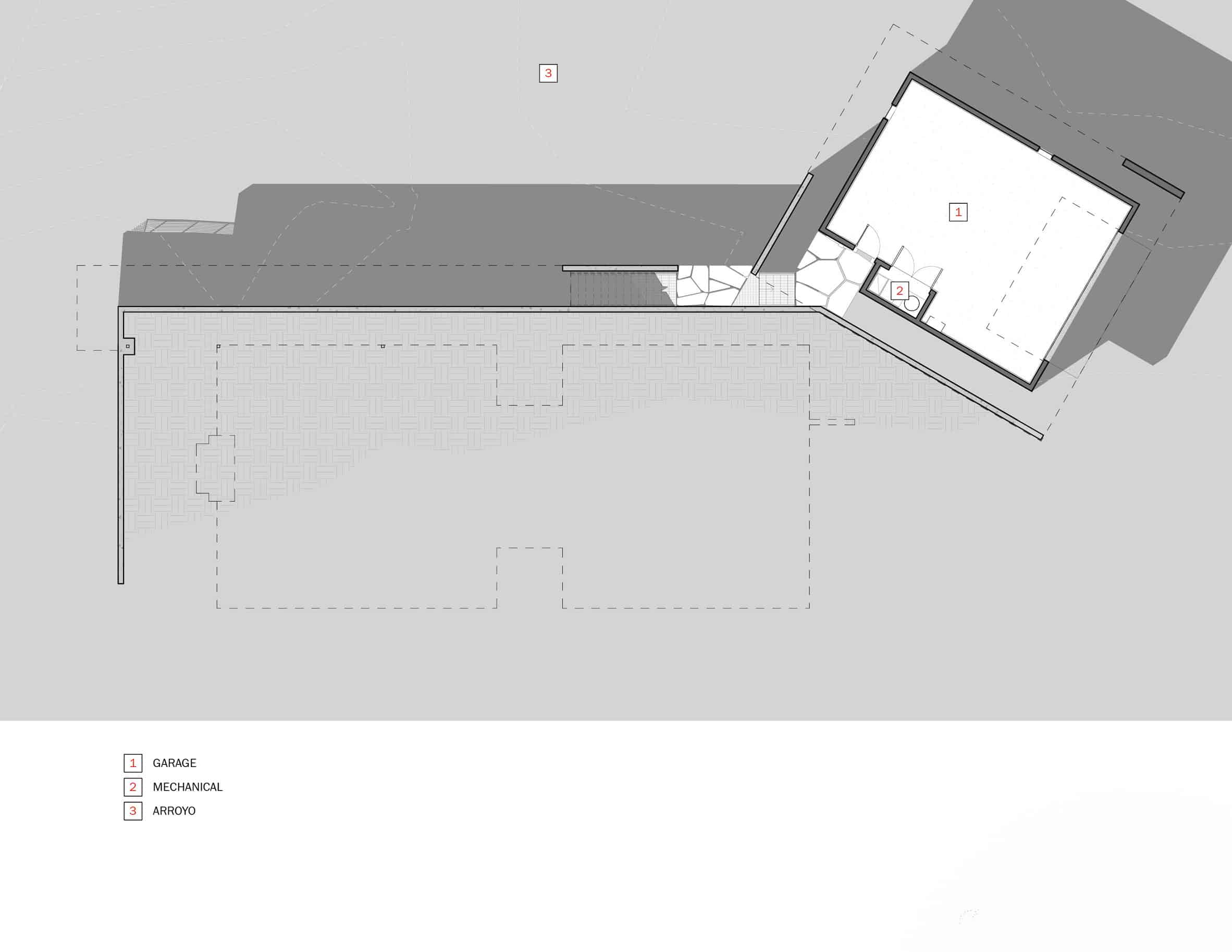
One volume is long and horizontal, and serves as the main dwelling. The other form, which rises two levels, is more compact. It contains a garage at ground level and guest accommodation up above.
Exterior walls are made of concrete, weathering steel and vast stretches of glass. Deep roof overhangs protect the glazed walls from the intense desert sun and also shade patios that encircle the home.
The main portion of the dwelling contains a generous master suite and an open-plan area for cooking, dining, and lounging. Large windows and sliding glass doors usher in ample daylight while affording sweeping views of the arid landscape.
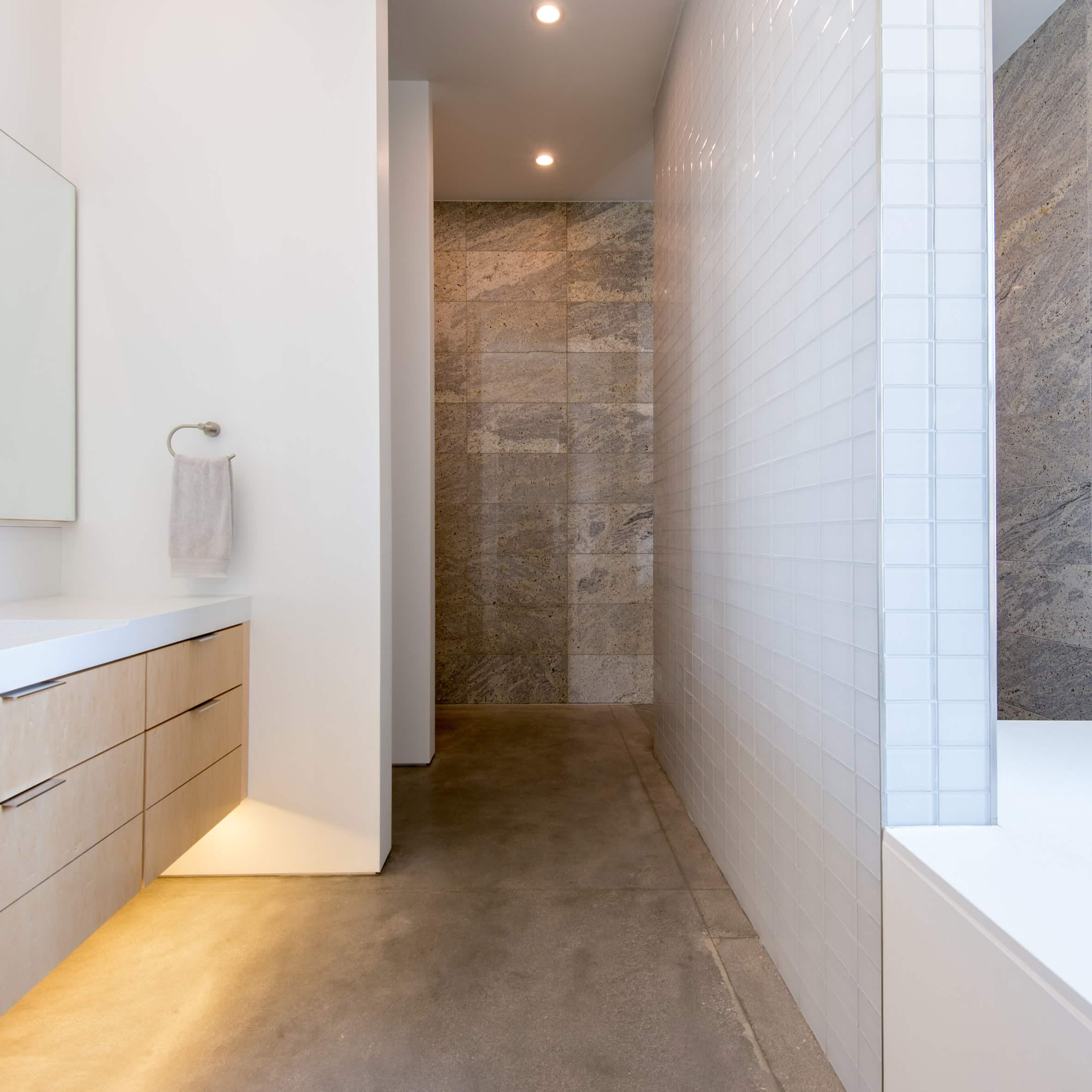
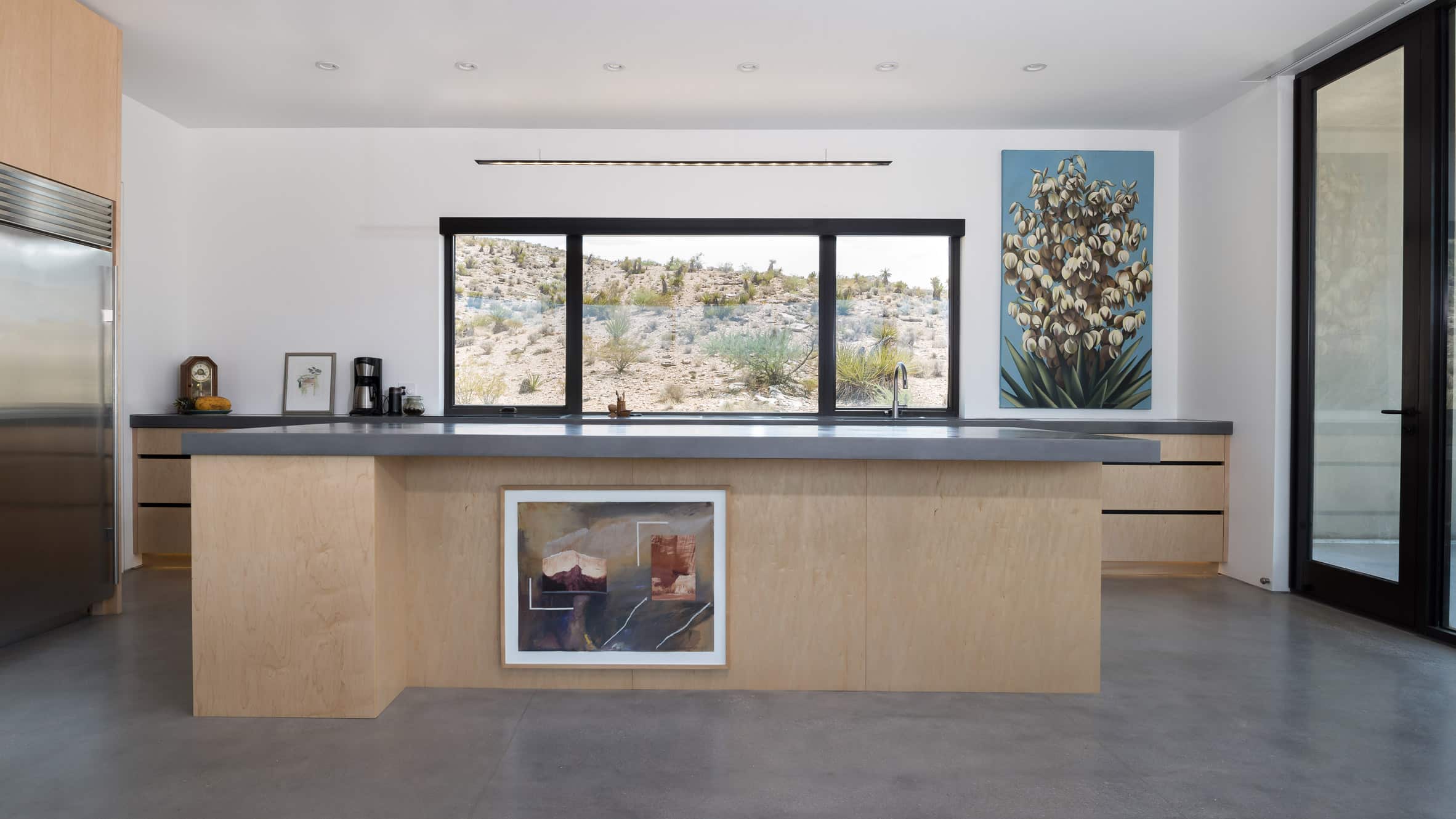
While the clients’ decor is eclectic, the team used a restrained palette of colours and materials for interior finishes. Polished concrete floors are paired with bright white walls and ceilings. Light-hued wood cabinetry and stainless steel appliances define the kitchen. In the bathroom, stone tiles evoke the desert terrain that surrounds the home.
One of the primary concerns for the architects was to create a dwelling in which the clients could grow old. “It was important for the home to not only address their needs now, but also 10, 20 or 30 years into the future,” the team said.
In response, the team placed all living spaces on the same level, with the exception of the garage. A driveway connects the upper level to the garage, enabling the clients to drop off their groceries before parking their car down below.
The team also incorporated features such as grab bars and a roll-in shower in the bathroom. Plus, the home’s wraparound deck connects all of the programmr areas, helping “address the realities of ageing in place”.
Sustainability was also considered during the project. Eco-friendly features include low-flow plumbing fixtures, non-toxic paint, and an in-slab radiant system for heating and cooling.
Greywater is used for landscape irrigation, and black water is treated onsite through a septic system. The couple also intends to install a photovoltaic array, with hopes of generating more energy than the home consumes.
Known for its vast desert terrain, Nevada offers a dramatic backdrop for architecture. Other houses in the state include the highly sculptural Shapeshifter House by OPA, which features angled zinc-clad walls and enjoys views of the Sierra Mountains.
- See all photos